
How Much Freezer Space You Actually Need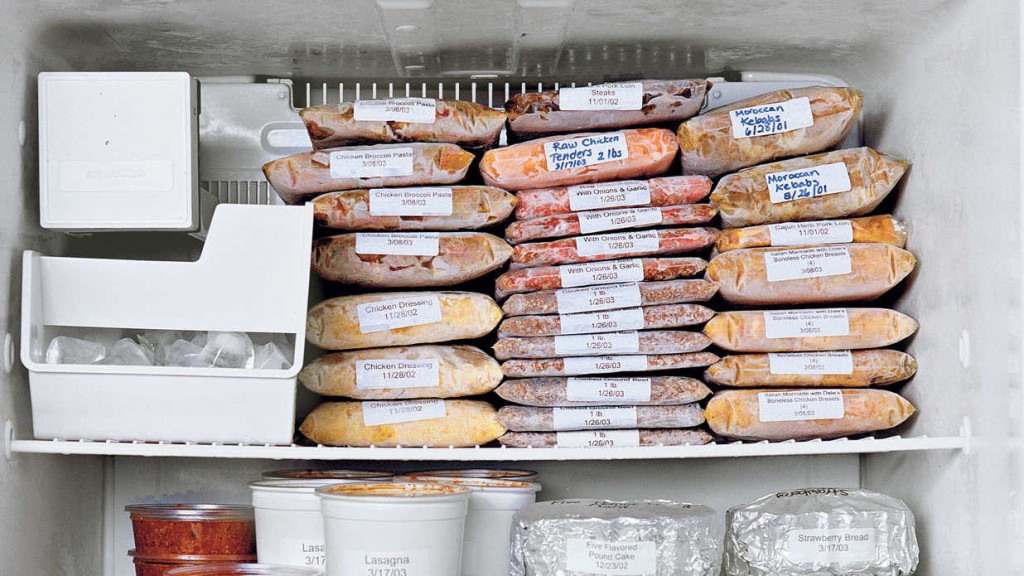
A Practical Guide for Hong Kong Homes, Small Kitchens & Weekly Meal Planning
Most people have no idea how much freezer space they actually need.
Hong Kong kitchens are small, freezer drawers are tiny, and every brand measures freezer capacity differently.
But here’s the good news: you probably don’t need a larger freezer — you just need to use the one you already have more efficiently.
This guide explains:
- how much space different meats actually take
- how to portion efficiently
- how to plan weekly meals without overcrowding your freezer
- how to store meat properly so nothing gets forgotten or wasted
Planning meals around cooked edible yield instead of raw weight makes freezer storage much more accurate.
Why Freezer Space Matters More Than You Think
Freezer organization becomes much easier when meals are planned in advance instead of buying randomly week to week.
Freezer space affects:
- how often you shop
- how much meat you can buy at once
- whether bulk buying makes sense
- how much food gets wasted
- how easy meal planning becomes
Most people assume they need more freezer space.
In reality, they usually need a better freezer strategy.
How Much Space Meat Actually Takes
Here’s the part most people never get told:
Some cuts freeze, stack, and portion far better than others, making them ideal for smaller Hong Kong freezers.
General Rule
1kg of vacuum-packed meat = roughly 15-25%% of a small freezer drawer
Vacuum-packed meat stores efficiently because it is:
- flat
- stackable
- easy to organize vertically
Space Efficiency by Product Type
Vacuum-Packed Flat Cuts
Examples:
- mince
- chicken thighs
- steaks
1kg = around 15–25% of a standard freezer drawer
Very space-efficient and ideal for smaller Hong Kong freezers because the packs stack neatly and freeze flat.
Vacuum-Packed Irregular Cuts
Examples:
- pork shoulder
- brisket
- tenderloin
1kg = around 25–40% of a standard freezer drawer
Long or uneven shapes reduce stacking efficiency and create wasted gaps.
Bone-In Cuts
Examples:
- ribs
- wings
- bone-in ribeye
1kg = around 35–50% of a standard freezer drawer
Bones and irregular shapes create air gaps, making these cuts much less space-efficient.
Bone-in products also contain less edible meat per kilogram than many people expect.
Whole Chickens
Typical size:
1.2–1.6kg
Around 80–100% of a standard freezer drawer
Whole chickens are bulky and awkward to stack, which makes them one of the least space-efficient ways to store meat in a small freezer.
Estimates vary depending on freezer design, packaging shape, and how efficiently items are stacked.
The 3 Types of Hong Kong Freezers (And What They Can Actually Hold)
1. Standard 2-Drawer Freezer (Most HK Homes)
Typical Capacity
25–35 litres
Realistic Meat Capacity
Approximately 8–12kg
(assuming vacuum-packed, flat storage)
What Fits Comfortably
- 3–4kg chicken thighs
- 2–3kg mince
- 1–2kg pork shoulder
- 1–2kg steaks
- 1kg wings
- 1kg fish fillets
After this, most standard HK freezers are effectively full.
2. The Tall Fridge/Freezer Combo
Typical Capacity
40-60 litres
Realistic Meat Capacity
Approximately 15-20kg
Great for:
- Families
- Batch cooking
- Monthly planning
3. The Separate Chest Freezer (Rare in HK)
Typical Capacity
80-150 litres
Realistic Meat Capacity
Approximately 40-70kg
Great for:
- Bulk buyers
- BBQ enthusiasts
- People who portion and label properly
How Much Freezer Space You Need (Based on Approximate Household Size)
Understanding realistic portion sizes prevents both freezer overcrowding and unnecessary overbuying.
Single person
6–8 kg of meat capacity Enough for:
- 1–2 weeks of meals
- A few emergency packs
- Some batch‑cooked portions
Couple
8–12 kg of meat capacity Enough for:
- Weekly planning
- A few “fun” cuts
- Frozen veg or dumplings
Family of 3–4
12–20kg of meat capacity Enough for:
- Weekly planning
- Batch cooking
- Kids’ favourites (wings, mince, nuggets)
Large families / heavy meat eaters
20–30kg of meat capacity Requires a tall freezer or chest freezer.
The Most Important Rule: Freeze in Meal‑Sized Portions
This is the difference between a freezer that works and a freezer that becomes a freezer full of forgotten food
Portion sizes to freeze:
- 300–350g for 1–2 people
- 600–700g for families
- 1kg only for slow‑cooking cuts
Slow-cooked cuts are ideal for batch cooking because they portion and reheat extremely well.
Why this matters:
- Faster defrosting
- Less waste
- Easier stacking
- More accurate weekly planning
The “Flat Pack” Method
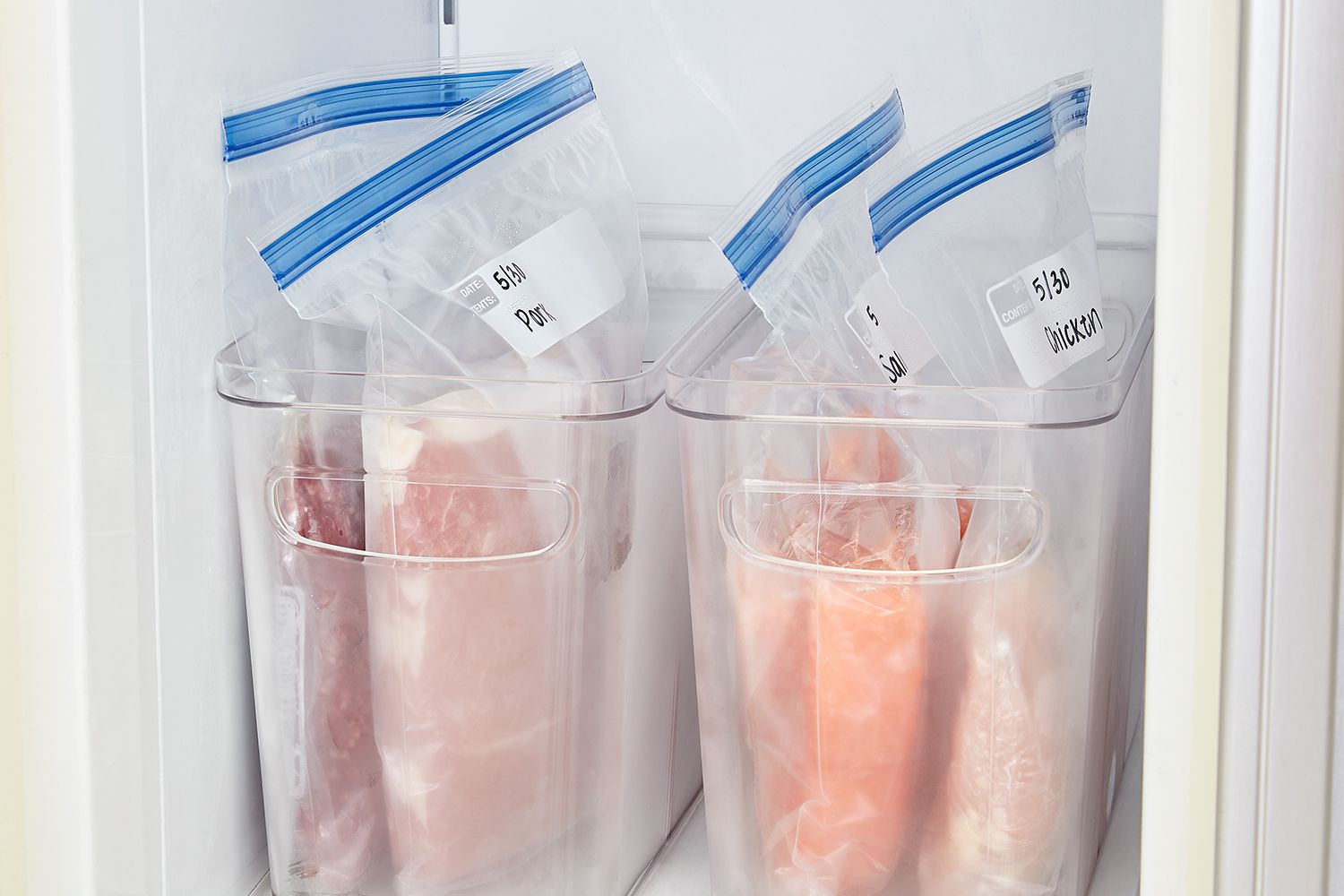
The best way to store meat in a small freezer is to freeze it flat.
How to do it:
- Keep meat in vacuum packs or zip bags
- Lay flat on a tray
- Freeze
- Then stack vertically like files
Benefits:
- Saves 30–40% space
- Faster freezing = better quality
- Easier to find what you need
What NOT to Put in a Small Freezer
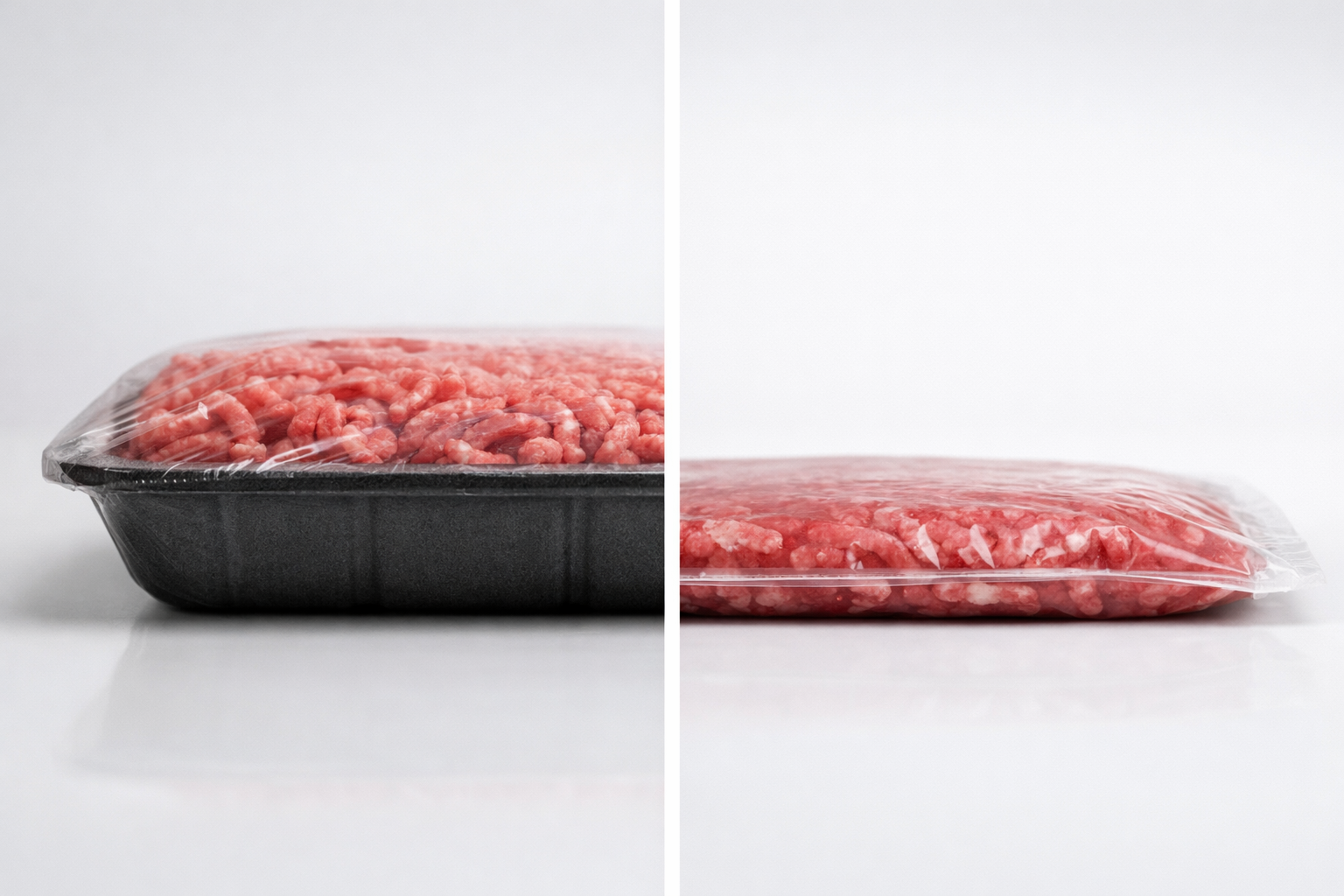
These items waste space and don’t give good value:
- Whole chickens
- Large bone‑in roasts
Large bone-in roasts may look impressive, but they are often inefficient for small HK freezer spaces.
- Bulky supermarket trays
- Unportioned leftovers
- Anything stored in round containers
Example: A Smart Freezer Setup for a Couple
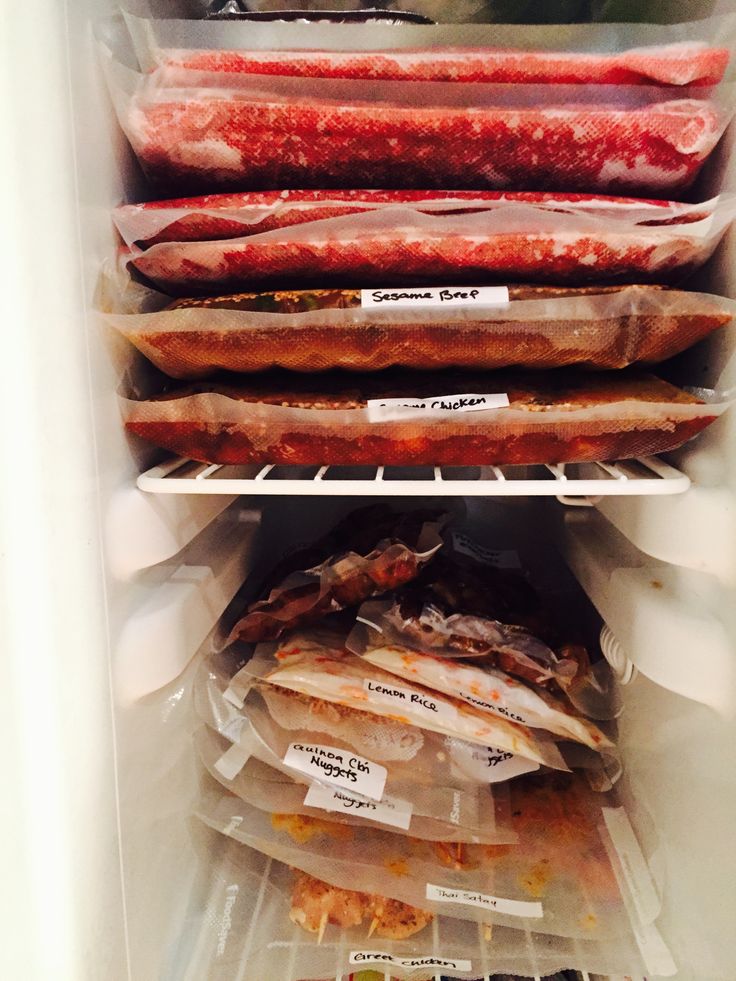
Here’s a realistic, HK‑friendly example:
- 1 kg chicken thighs (2 packs × 500g)
- 1 kg minced beef (2 packs × 500g)
- 1 kg pork shoulder (1 pack × 1kg)
- 600 g steaks (2 × 300g)
- 1 kg wings (1 pack)
- 1 kg fish fillets (2 packs × 500g)
Total: 5.6kg Fits easily in a standard 2‑drawer freezer with room to spare.
Practical Takeaway
You probably don’t need a larger freezer — you need a smarter freezer strategy.
When meat is:
- portioned properly
- frozen flat
- labeled clearly
- planned around weekly meals
even a small Hong Kong freezer can comfortably hold:
- a full week of meals
- emergency backup portions
- batch-cooked meals
- a few special cuts for weekends or BBQs
Good freezer organization saves space, reduces waste, and makes meal planning dramatically easier.


