
Why We Can't List Every Size (And Why Some Cuts Have Real Limits)
Why We Can't List Every Size (And Why Some Cuts Have Real Limits)
Why the Website Only Lists a Few Sizes
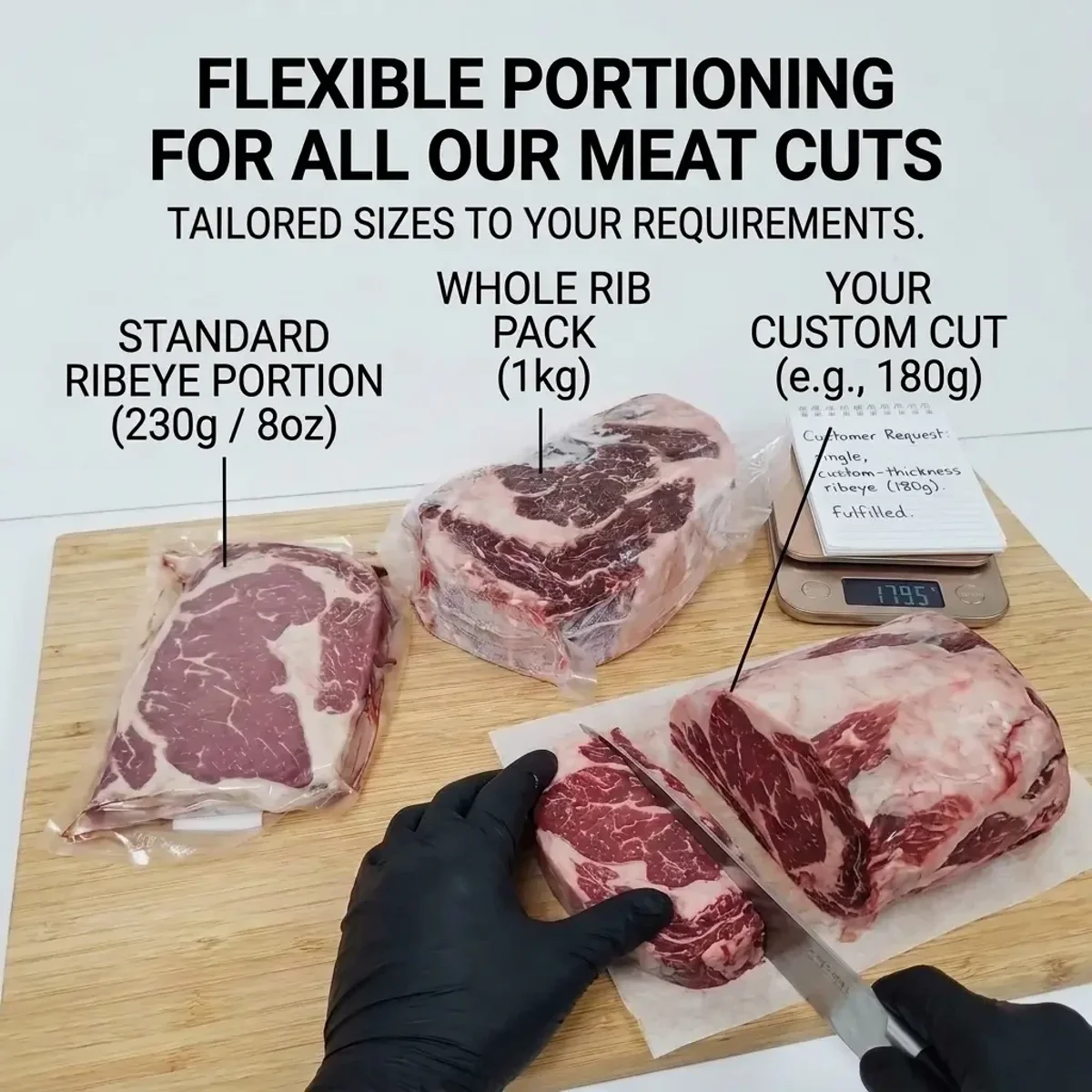
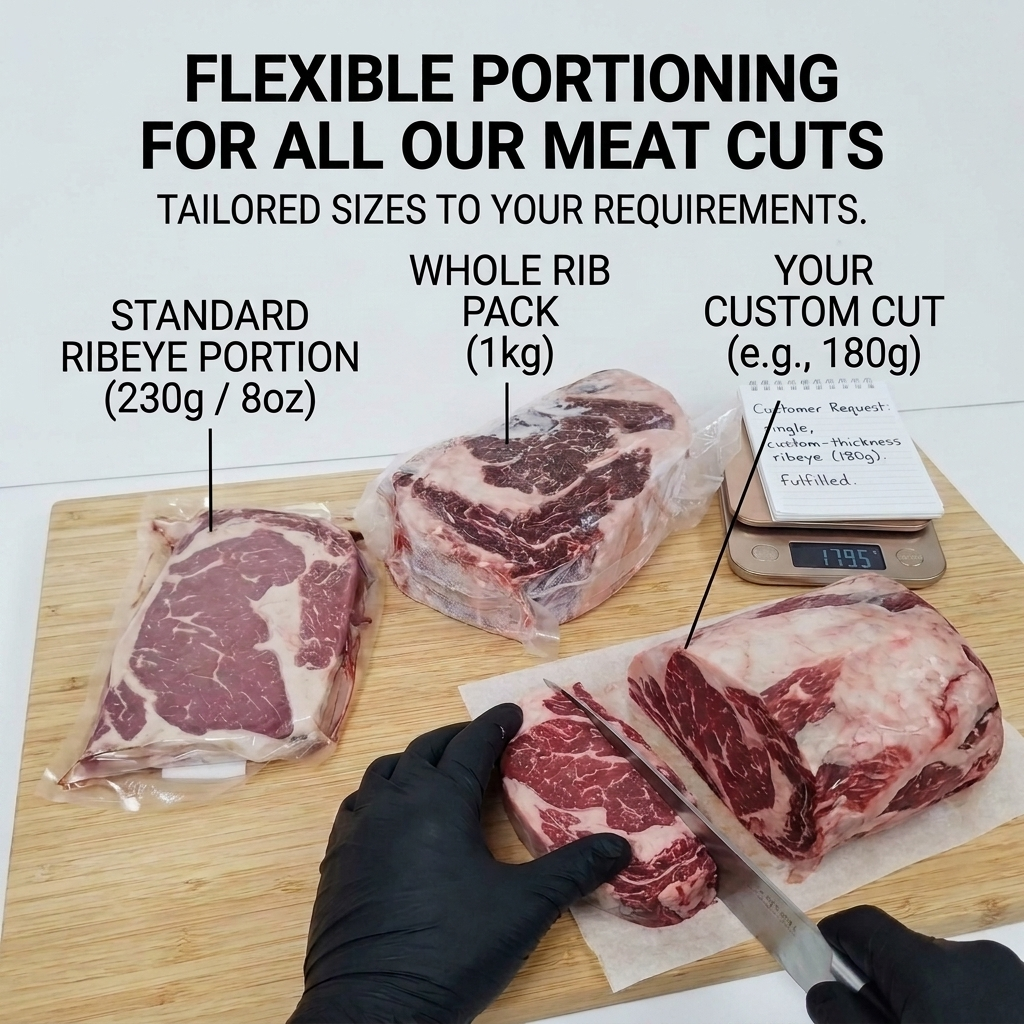
When you see 8 oz and 12 oz ribeyes or a 2 kg brisket on the site, that's not because those are the only sizes we can cut. It's because listing every possible weight would make the site unreadable. Each cut varies naturally, and every customer cooks differently. We keep the listings simple so you can see the most common sizes at a glance, then contact us for anything else.
A brisket shown as 2 kg can easily be cut to 1 kg. A pork belly listed at 1 kg can be halved to 500 g. The limitation is technical, not culinary. The flexibility is always there.
It goes beyond size, too. Every so often someone asks for a cut we don't carry as a listed product at all, and depending on what it is, we can sometimes still source it. Sometimes it's simply a naming difference rather than something we genuinely don't have. If you're after something specific and don't see it on the site, it's always worth asking rather than assuming the answer is no.
The One Real Limit: Bone-In Cuts
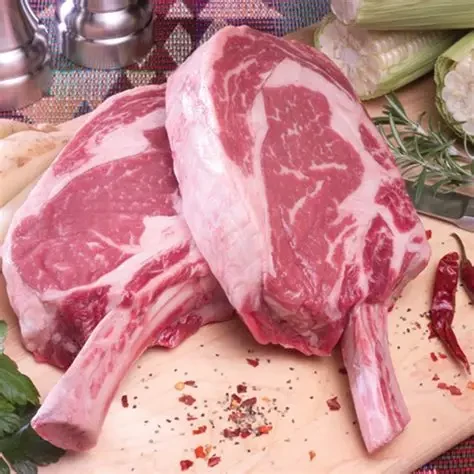
Boneless cuts can be portioned to almost any weight. Bone-in cuts can't. That's because bone spacing sets the rules. A ribeye with one bone weighs roughly 1.25 kg, and a full four-bone section comes in around 5 kg. You can't slice between bones without destroying the structure.
It's not a lack of willingness. It's physics. That's why bone-in ribeyes are sold by bone count, not by arbitrary weight. Understanding that helps separate "custom cutting" from "custom butchery."
Why Size Isn't Just About Portion. It's About How You Cook
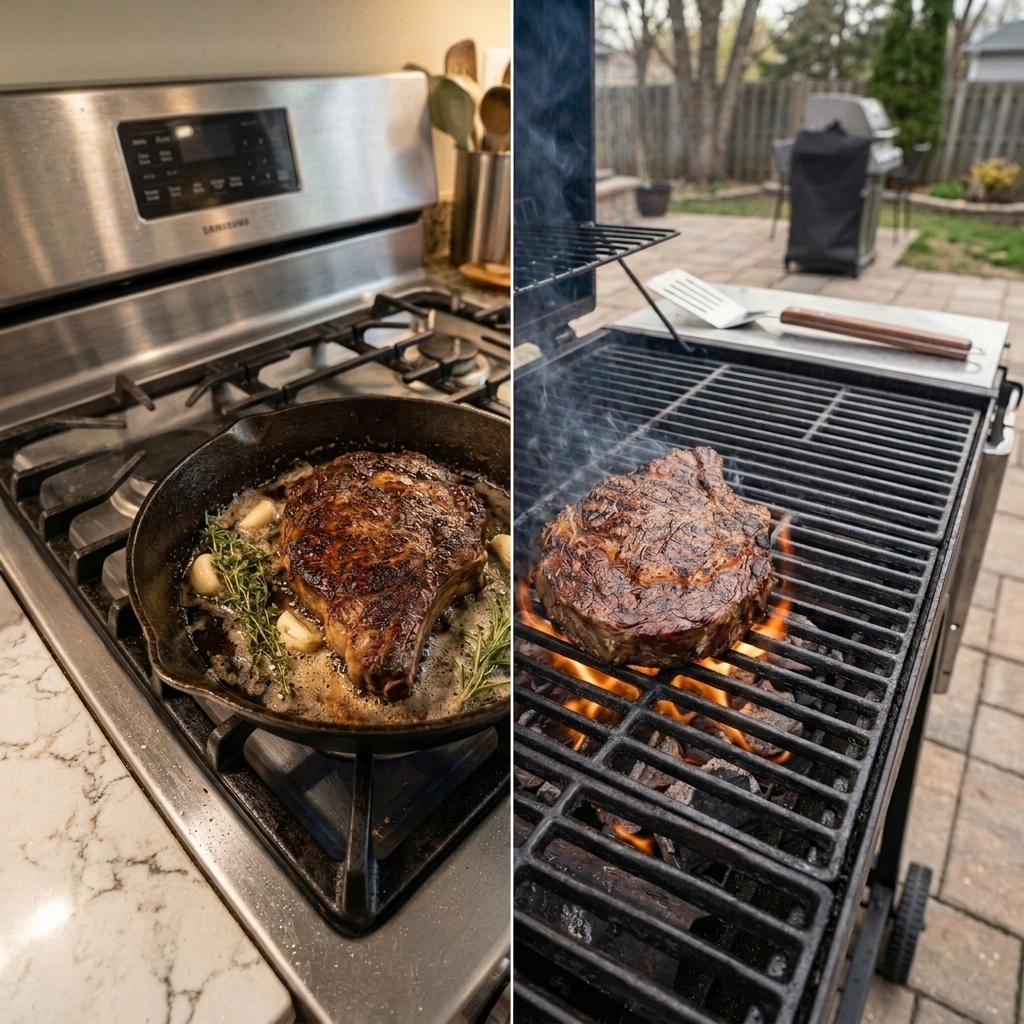
This is where preference meets practicality. On a barbecue, a thicker steak (say 12 oz) gives you more margin to build a proper char without overcooking the centre. In a pan, especially cast iron, a thinner steak around 8 oz reaches crust and doneness together, faster and more evenly.
There's a real reason for that. A grill produces flavours a pan can't quite match: smoke compounds from dripping fat, and deeper browning from radiant heat (the same Maillard reaction that gives seared meat its crust). Grills also run hotter and less predictably than a pan, so a thicker cut gives you the margin to build that crust without the centre overshooting your target doneness.
It's not a hard rule, but it's a common pattern for a reason: grill heat is radiant and uneven, pan heat is direct and controlled. So the right size isn't just about appetite. It's about method, and about how many people you're feeding, whether that's a quiet dinner for two or a full BBQ for a crowd.
How to Order a Custom Size
If a listed size isn't quite right, message us on WhatsApp with the cut, your target weight, and how many portions you need. For boneless cuts we can usually accommodate most requests with a little notice; for bone-in cuts, we'll let you know the nearest size the bone structure allows.
Closing Thought
We list what's practical, not what's possible. Behind every product page is a butcher's bench, not a factory line. If you want something cut to your own size, or need help choosing the right one for how you cook, just ask. That's the part the website can't automate, and the part we'll always do by hand.
We're not here to sell you meat. We're here to make you better at buying it.
— The Meat Guy Hong Kong



Thank you for posting your blog comment. It will be reviewed and set live soon. If you provided your email then you will be notified of replies to this comment.