
What Does "M5 Rump" Actually Mean? - Guide to Steak Labels in Hong Kong
What Does "M5 Rump" Actually Mean? A Guide to Steak Labels in Hong Kong
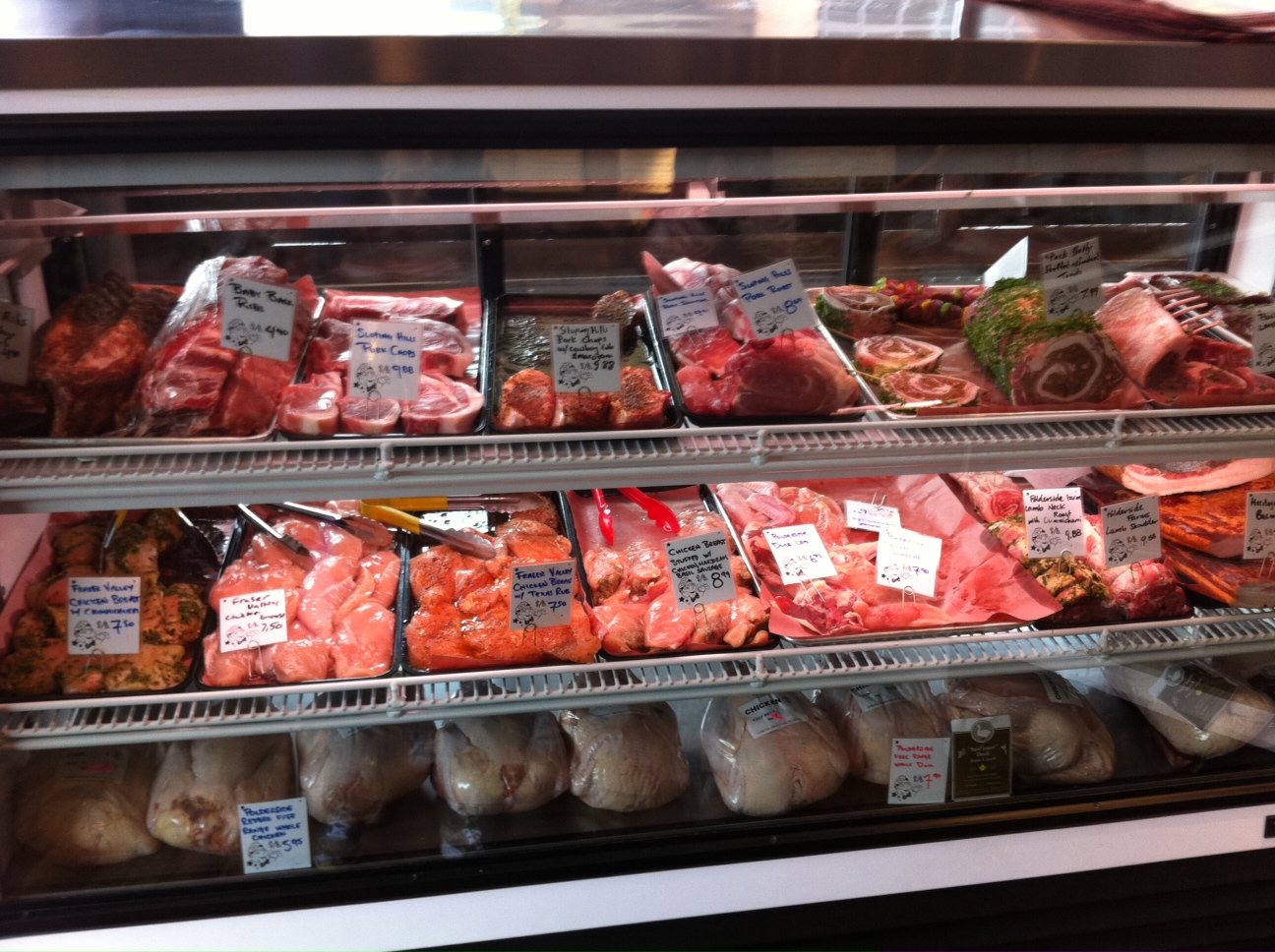
You've probably seen it.
M2 rump. M3 sirloin. M4 ribeye.
The numbers look official. They sound technical. And they often suggest one thing:
Higher number = better steak.
But before you let a number on a label influence your buying decision, it's worth understanding what that number actually means — and what it doesn't.
Because when it comes to beef grading, things aren't always as straightforward as they appear.
Why This Matters
This isn't about calling anyone out.
It's not about saying one butcher is better than another.
It's about helping customers understand what they're buying.
The reality is that a single number on a label tells you very little unless you know which grading system it comes from.
And in Hong Kong, that's where a lot of confusion begins.
If you haven't already, it's worth reading our guide to marbling scores — it covers the grading systems in detail and explains why the numbers you see in Hong Kong don't always mean what they appear to.
A Quick Guide to Beef Grading
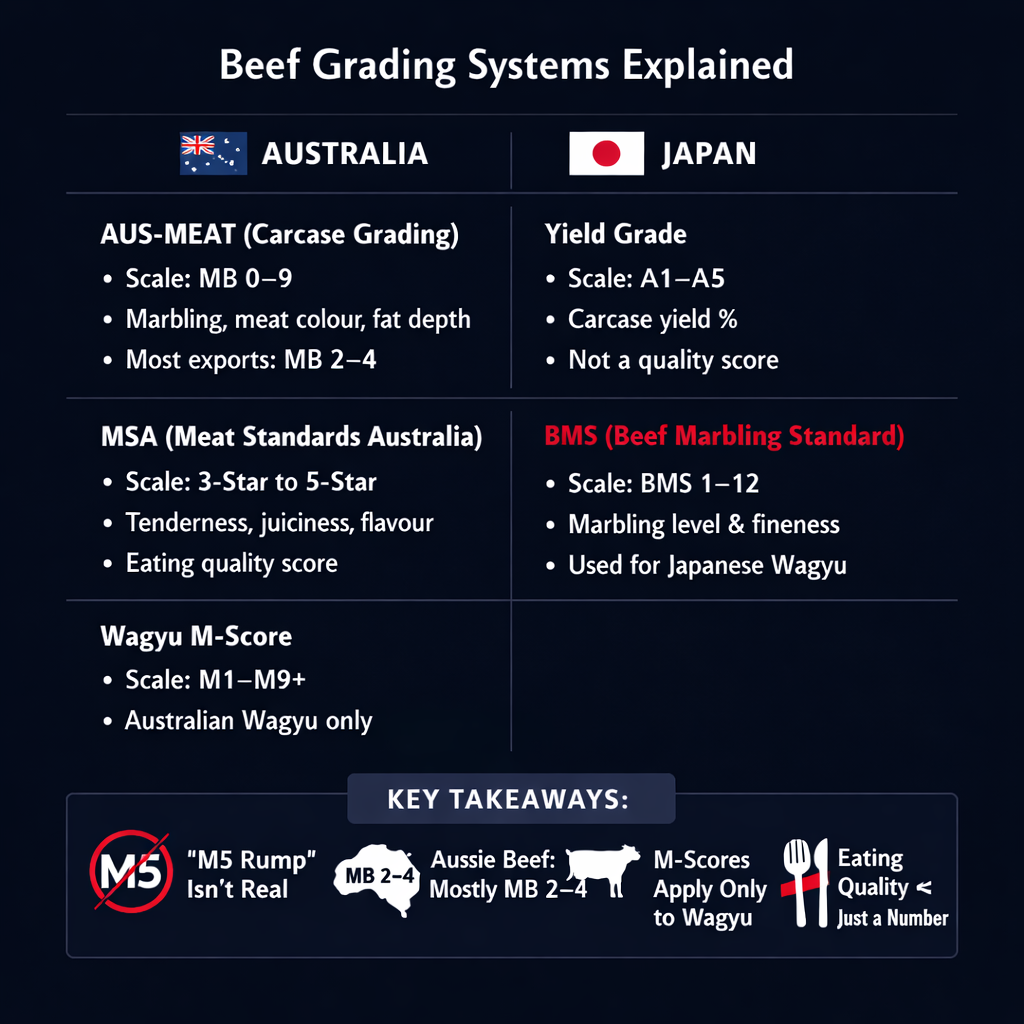
Australia uses several recognised systems to assess beef.
The two most important are:
AUS-MEAT The industry's carcase grading system.
MSA (Meat Standards Australia) A system designed to predict eating quality based on factors such as tenderness, juiciness and flavour.
Australia also uses AUS-MEAT Marbling Scores (MB scores) to assess intramuscular fat, commonly referred to as marbling.
These are legitimate industry measures and are often used by premium Angus and grain-fed beef programs.
As a general guide, much of the quality Australian beef exported around the world sits in the MB2–MB4 range. That's not a sign of lower quality — it's simply where many well-bred, well-fed Angus and grain-fed cattle naturally fall.
In other words, a steak doesn't need extreme marbling to be tender, flavourful, and enjoyable to eat.
Japan uses a different grading system for Wagyu.
This includes:
Yield grades (A, B or C) Beef Marbling Scores (BMS 1–12)
Australian Wagyu is often marketed using marbling terminology derived from these standards, which is why many consumers are familiar with labels such as M4, M5, M8 or M9+.
So What Does "M5" Mean?
That's the important question.
When you see a label such as:
M5 Ribeye or M4 Sirloin
the first thing to ask is:
What grading system is being referenced?
Is it:
A formal marbling assessment? An AUS-MEAT marbling score? A brand specification? A retailer's own description?
Without that context, the number on its own doesn't tell you very much.
A number only has meaning when the grading system behind it is clearly explained.
For perspective, many premium Australian Angus programs naturally fall within the MB2–MB4 range. So when a retailer prominently markets a number, it's worth understanding exactly what that number represents and how it was determined.
The Risk of Chasing Numbers
The problem isn't necessarily the number itself.
The problem is when consumers start using the number as a shortcut for quality.
Because beef quality isn't determined by a single figure, as we explored in "What you're really paying for when you buy better meat.".
A steak can have excellent marbling and still disappoint if:
The breed isn't suited to the eating style you're looking for. The ageing process was poor.The cut wasn't prepared properly. The steak is cooked incorrectly.
Likewise, a well-aged Angus ribeye can be fantastic eating even if the label doesn't display a marbling number at all.
What Actually Matters When Buying Steak
If you want consistently good beef, focus on the things that genuinely affect eating quality:
Breed Angus, Hereford, Shorthorn and Wagyu all have different characteristics.
Feeding Program Grass-fed and grain-fed beef deliver very different flavour profiles.
Ageing Proper ageing has a significant impact on tenderness and flavour.
Cut Selection A ribeye, sirloin and rump each offer a different eating experience.
Handling & Storage Good cold-chain management matters more than many people realise.
Cooking Method The right cooking method can make a bigger difference than any number printed on a label - something a reverse sear demonstrates better than almost anything else
How to Buy Smarter in Hong Kong

When you're buying steak, ask a few simple questions:
Where is the beef from? Is it grass-fed or grain-fed? How long has it been aged? What cut is it? What grading system is being used?
A good butcher should be able to answer those questions clearly, and choosing meat based on how you actually cook is just as important as the label
The more transparent the information, the easier it is to make an informed choice.
The Bottom Line
A number on a label isn't a guarantee of quality.
It may represent a genuine marbling assessment. It may be part of a brand specification. Or it may simply be marketing shorthand.
Either way, the number only tells part of the story.
The best steak you'll ever eat won't be great because of a number. It'll be great because it was the right cut, properly sourced, properly handled and properly cooked — bought from someone who could tell you exactly why, not just what score it carries.
And that's worth far more than any label alone.



Thank you for posting your blog comment. It will be reviewed and set live soon. If you provided your email then you will be notified of replies to this comment.