
What Marbling Scores Really Mean
What Marbling Scores Really Mean
When you’re buying steak, it’s easy to focus on the label.
M2.
M3.
Higher numbers, higher price — it feels straightforward.
But once you spend a bit more time around meat, you realise something important:
Those numbers don’t always tell the full story.
And sometimes, they can be a little misleading if you don’t know how to read them.
Marbling: What It Actually Is
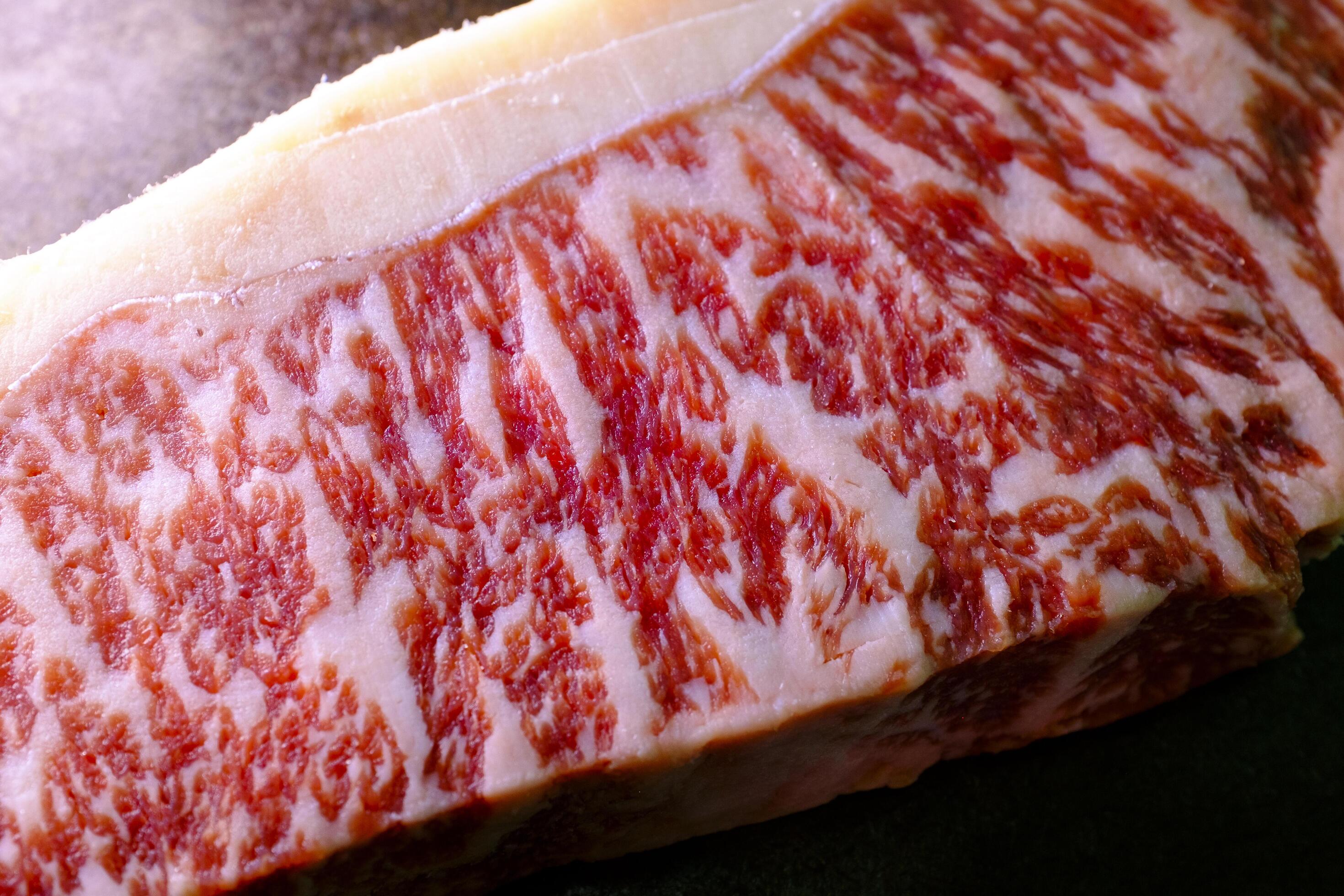
Marbling refers to the fine streaks of fat within the muscle — not all cuts distribute it the same way.
It’s what gives steak:
- flavour
- juiciness
- tenderness
As a general rule, more marbling means a richer eating experience.
That’s why marbling scores exist — to give a rough indication of how much intramuscular fat a cut contains.
But that’s only part of the picture.
Not All Marbling Scales Work the Same Way
In Australia, marbling scores are most commonly associated with Wagyu beef, where grading systems (like M1–M9+) are clearly defined. For non-Wagyu beef, AUS-MEAT marbling scores (MB0–MB9) do exist as an industry measure, but they're rarely displayed on retail labels — which is where confusion often begins.
But not all beef is graded in the same way.
For example:
- Black Angus doesn’t always follow the same formal marbling scale
- Different suppliers may use their own interpretations
- Labels can sometimes be simplified for easier marketing
This doesn’t make the meat good or bad — but it does mean the number on the label isn’t always a precise, standardised measurement.
It’s a guide, not a guarantee.
The Part Most People Don’t See: Variation Within the Same Cut
Here's what that looks like in practice.
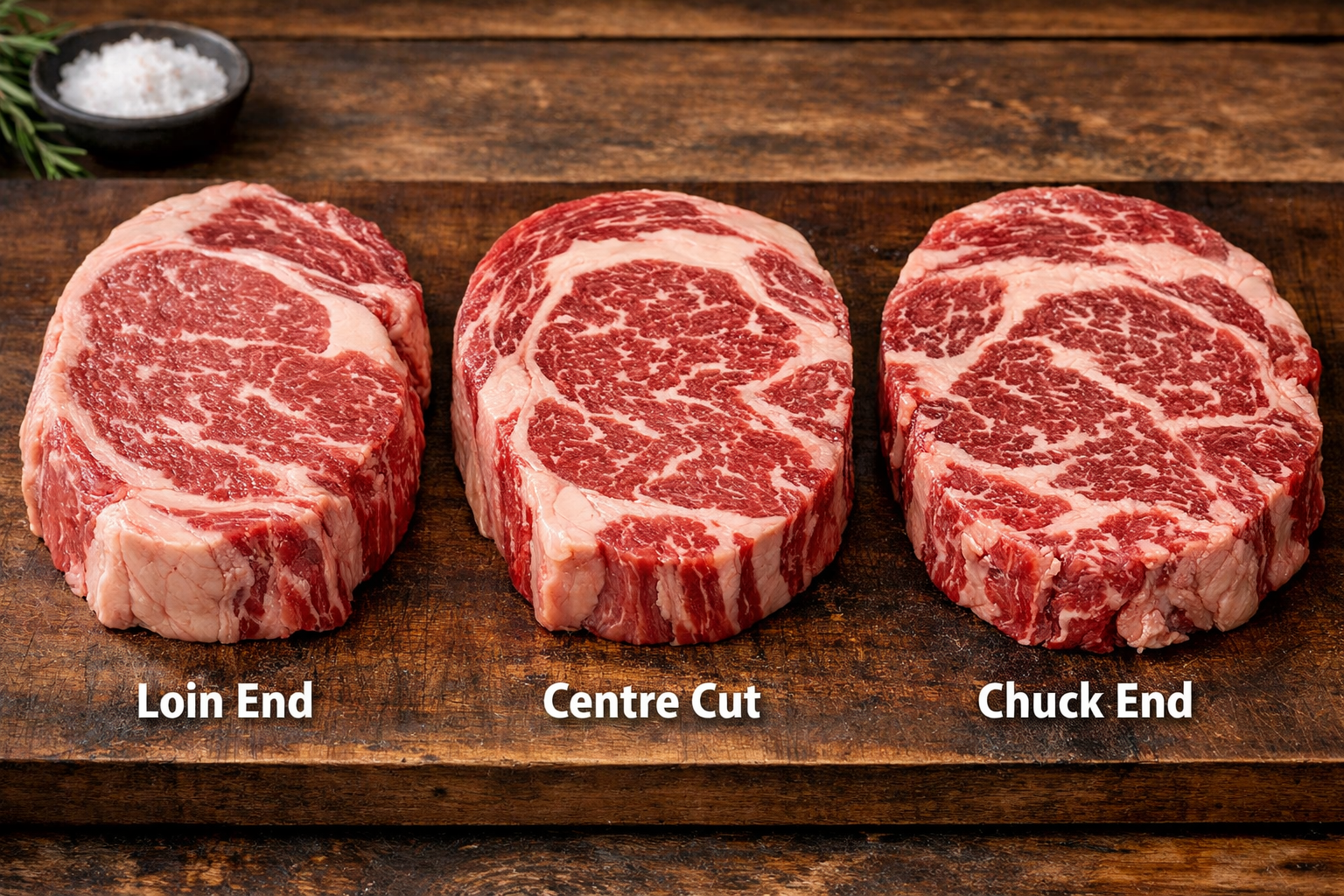
All three of these are ribeye — taken from different parts of the same section.
The loin end is typically leaner, the centre cut more balanced, and the chuck end shows noticeably more marbling.
It’s a simple example of how variation exists within the same cut — something a marbling score alone doesn’t fully capture.
Even within the same animal, marbling isn’t uniform.
Where the steak is cut from along the rib section has a direct impact on how it looks, cooks, and tastes.
A loin-end ribeye is usually:
- slightly leaner
- more structured
- a bit firmer when cooked
A centre cut tends to be:
- more balanced
- consistent
- a reliable middle ground
While a chuck-end ribeye is often:
- more heavily marbled
- softer
- richer in flavour
All three are ribeye.
All three can be excellent.
But they will cook and eat differently — even if they carry the same label.
That’s something a simple marbling score can’t fully capture.
If you’ve ever wondered why ribeye can look and cook so differently, I’ve broken that down further in One Cut, Many Meals — How Ribeye Changes Depending on How You Buy It.
What Actually Matters More Than the Number
Marbling is important — but it’s only one part of what makes a good steak.
Other factors often matter just as much:
- how the cut is trimmed
- thickness and consistency
- how evenly it cooks
- the balance between fat and meat
- how it fits the way you like to cook
A beautifully balanced ribeye with moderate marbling will often outperform a poorly cut piece with a higher score.
Choosing the right cut becomes much easier once you match it to how you actually cook at home — something I’ve written about in How to Choose Meat Based on How You Actually Cook at Home.
Price, Perception, and Reality
It’s natural to assume that a higher number — and a higher price — means a better result.
Sometimes that’s true.
But not always.
Many well-sourced, well-cut steaks naturally sit in what would be considered a moderate marbling range, and deliver excellent results at home.
Once you understand what you’re looking at, you start to realise:
You’re not just paying for marbling.
You’re paying for consistency, sourcing, and how the meat performs when you cook it.
It’s also why I don’t always default to the most expensive option, as I explored in Wagyu vs Black Angus — Why I Don’t Always Pick the Most Expensive Meat on the Menu.
How to Choose With Confidence
Instead of relying on one number, it helps to look at the whole picture:
- Look at the meat itself — is the marbling evenly distributed?
- Consider the cut — where does it come from?
- Think about how you’ll cook it
- Choose what suits your style, not just the label
Because in the end, the goal isn’t to buy the highest number.
It’s to cook something that turns out well on your plate.
The Real Takeaway
Marbling scores are useful — but they’re not absolute.
They don’t account for where the cut comes from, how it’s prepared, or how it will cook in your kitchen.
Once you understand that, choosing meat becomes much simpler.
You stop chasing numbers.
And start focusing on what actually matters — flavour, balance, and consistency



Thank you for posting your blog comment. It will be reviewed and set live soon. If you provided your email then you will be notified of replies to this comment.