
The Curry Cut Guide: Breast or Thigh? Shoulder or Leg? Chuck or Rump?
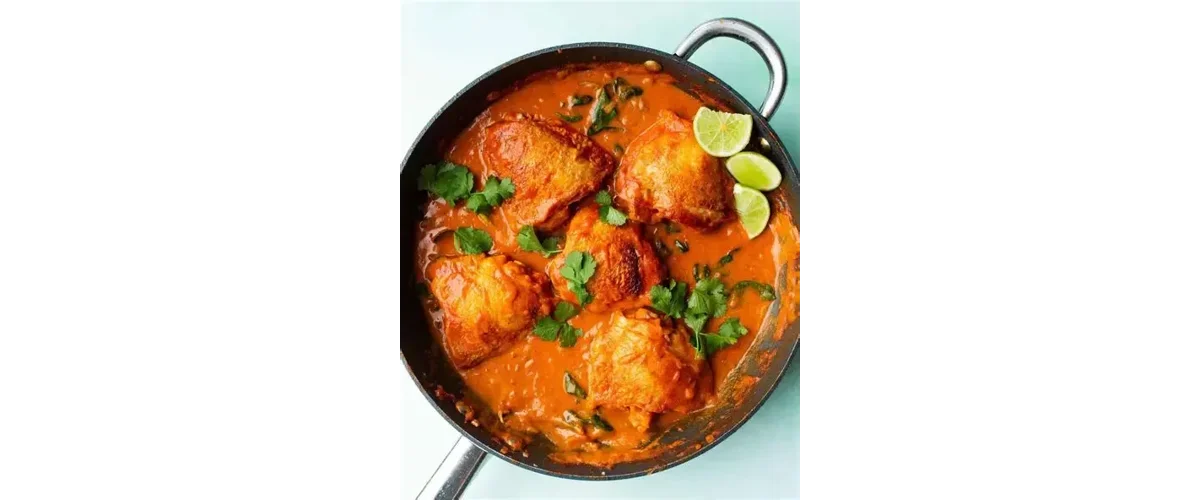
The Curry Cut Guide: Breast or Thigh? Shoulder or Leg? Chuck or Rump?
Why the cut you choose matters more than the spices you use.
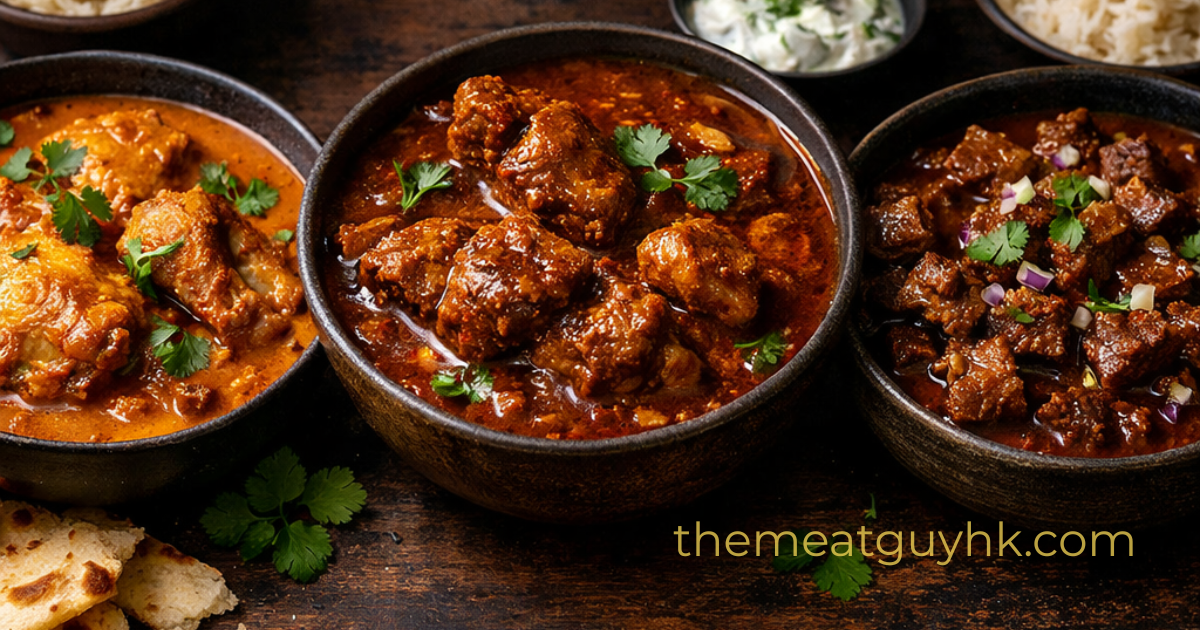
Curry is one of the most forgiving dishes in the world — until it isn't.
Choose the wrong cut and you get dry chicken, tough beef, or lamb that never quite melts the way it should. Choose the right cut and suddenly your curry has body, richness, and that deep flavour that only comes from fat and collagen doing their slow-cook magic.
This guide breaks down the real question home cooks face every week:
Which cut should I use for my curry — and why?
Not "which cut is best overall." But which cut is best for the style of curry you're actually cooking.
Because that distinction matters more than most people realise.
Chicken: Breast vs Thigh
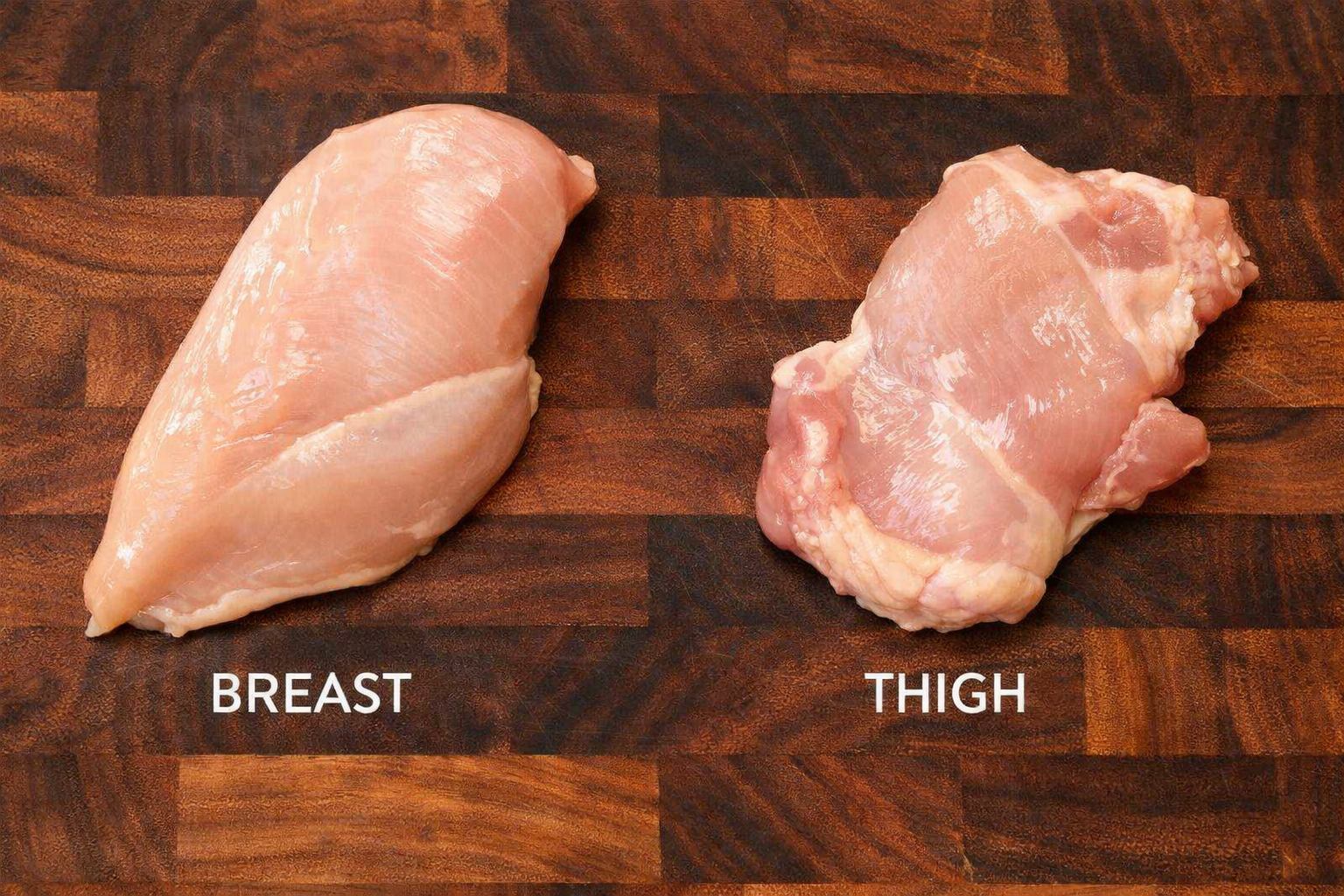
The winner for most curries: Thigh
Chicken thigh is simply built for curry. Higher fat content, deeper flavour, and a texture that stays tender even after 45–60 minutes in a simmering pot.
Thigh absorbs spices differently to breast — the fat carries flavour into the meat rather than just coating the surface. Bone-in thighs go even further, contributing richness directly into the sauce as they cook.
The result is chicken that adds to the curry rather than just sitting in it.
Where breast still has a place
Breast works beautifully in quick, high-heat curries — a Thai green or Thai red where the meat cooks fast and the sauce is lighter and more fragrant than saucy. In those styles, the leaner texture is actually an asset.
Breast isn't wrong. It's just not built for slow, saucy curries. Push it past 20-25 minutes in a heavy sauce and it will dry out regardless of how carefully you cook it.
The simple rule: if the curry simmers for longer than 30 minutes, use thigh.
Lamb: Shoulder vs Leg
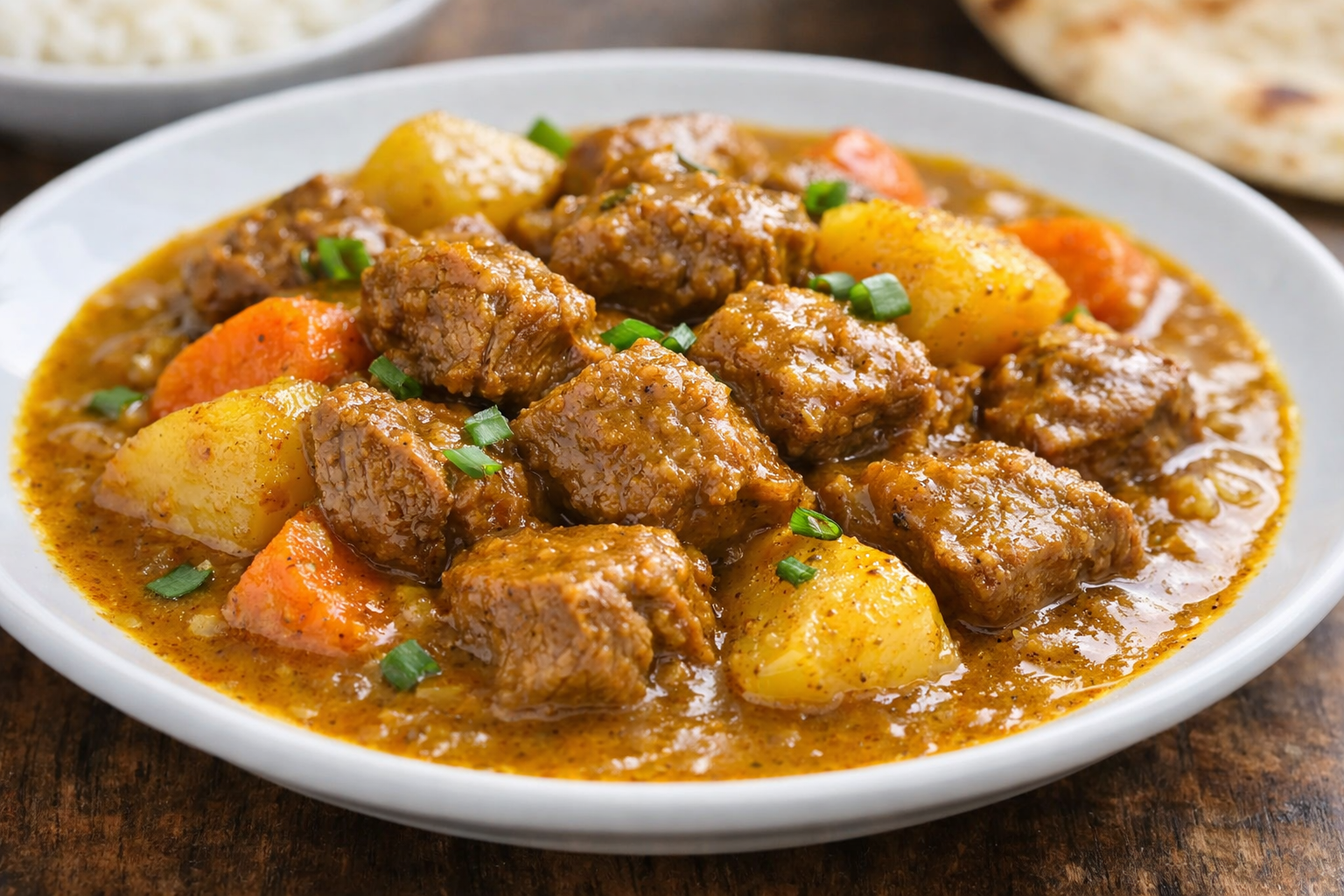
The winner for slow braises: Shoulder
Lamb shoulder is one of the most underrated curry cuts available — and one of the best. More fat, more connective tissue, and collagen that breaks down into the sauce over a long cook, giving it a richness and body that leg simply can't match.
Shoulder is also far more forgiving. It's genuinely hard to overcook — the longer it goes, the better it gets. That's the opposite of leg, which tightens and dries if it goes too long.
If you want a curry that tastes like it came from a restaurant kitchen, shoulder is where that flavour comes from. It's the same principle behind why slow cooking still transforms tough cuts — the collagen does the work that expensive cuts can't.
Where leg shines
Leg works well in shorter cooks or drier, spice-forward curries where you want the meat to hold its shape rather than fall apart. A dry lamb bhuna or a spice-crusted lamb curry with minimal sauce — leg is the right call there.
Leaner, cleaner, and great for certain styles. Just not the slow, saucy ones.
Beef: Chuck vs Rump
The winner for slow curries: Chuck
Chuck is the king of slow-cooked beef curries because of one thing: collagen.
As chuck cooks low and slow, collagen melts into gelatin — giving the sauce body, silkiness, and depth that no spice blend can replicate on its own. It's the same reason chuck is unbeatable for stews and braises, and the same principle applies perfectly to curry.
More marbling, more connective tissue, more of everything that makes a slow curry worth eating. The sauce becomes sticky, rich, and glossy in a way that lean cuts simply don't produce.
This is the science behind why some cuts are built for slow cooking and others aren't — fat and collagen are doing the heavy lifting.
Where rump still works
Rump is excellent for quick curries or drier styles where you want the beef to hold its shape rather than melt into the sauce. A faster, higher-heat beef curry — something closer to a stir-curry than a braise — is where rump performs well.
If you've read our guide to rump, sirloin, and ribeye, you'll know rump is a cut that rewards proper technique. In a curry context, that means high heat and a shorter cook — not the low, slow approach where chuck takes over.
The distinction is simple: rump for fast curries, chuck for slow ones. Both are correct in their context.
A quick note on chuck mince
Chuck mince deserves a mention here because the same principle applies — the fat content in chuck mince is significantly higher than regular beef mince, which is why it produces a richer, more flavourful keema curry or mince-based sauce.
If you're making a keema curry or a quick mince-based curry that's ready in 30 minutes, chuck mince is the right choice for the same reason diced chuck wins in a slow braise — the fat does the work that lean mince simply can't.
The Golden Rule of Curry Cuts
It's not about the animal.
It's not even about the cut.
It's about the cooking time and the style of curry you're making.
Long, slow, saucy curry → fat and collagen cuts
Thigh, shoulder, chuck — these cuts get better the longer they cook.
Quick, high-heat curry → leaner cuts
Breast, leg, rump — these cuts need speed and restraint, not hours in a pot.
Once you understand that principle, choosing the right cut stops being a guess and becomes a decision. The same knowledge that applies to choosing meat based on how you actually cook applies directly here — match the cut to the method, not the other way around.
Quick Recommendations by Curry Style
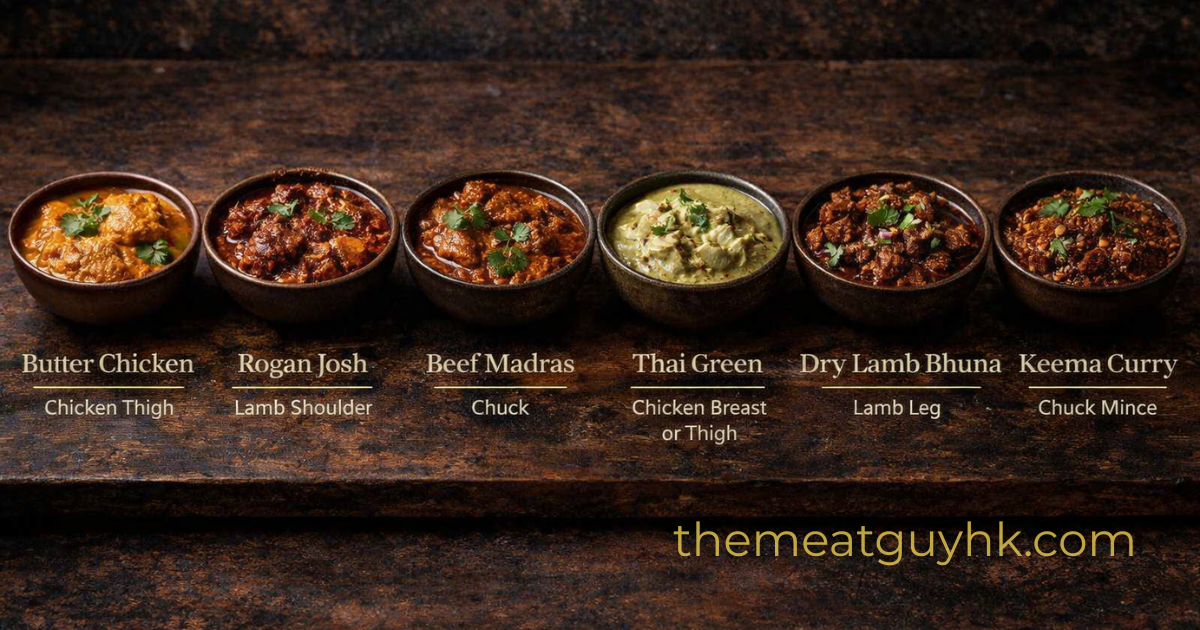
Butter chicken / tikka masala → Thigh
The sauce is rich and creamy — thigh holds up and adds to it.
Rogan josh / lamb korma → Shoulder
Long, slow, deeply spiced — shoulder was made for this.
Beef madras / slow beef curry → Chuck
The sauce needs body. Chuck provides it.
Thai green / Thai red → Breast or thigh
Quick cook, fragrant sauce — both work, thigh stays juicier.
Dry lamb bhuna → Leg
Shape matters here more than melt. Leg holds it.
Quick beef stir-curry → Rump
High heat, short cook — rump performs well under pressure.
Keema curry → Chuck mince
Thirty-minute winner. The fat in chuck mince makes the sauce.
The Real Takeaway
The best curry you've ever eaten probably wasn't the result of a better spice blend.
It was the result of the right cut, cooked the right way, for long enough to let the fat and collagen do what they're designed to do.
That's not a technique secret. It's not a restaurant trick.
It's just understanding what each cut is built for — and giving it the time and method it needs.
Get that right, and the spices take care of themselves.