
Cutting Meat
Why can't every cut be sliced to an exact weight?
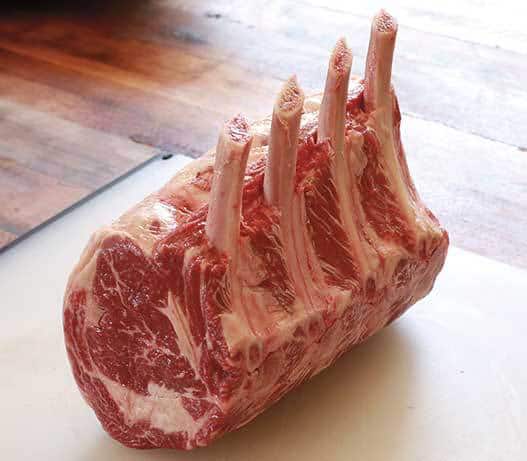
Customers often assume that any cut can be portioned to a precise number on the scale. It sounds simple: ask for 300 grams, receive 300 grams. In reality, the way whole muscles are structured means some cuts can be portioned very accurately, while others have natural limits that make exact weights impossible. Understanding those limits helps you choose the right cut for the right purpose.
The structure of the cut determines what's possible
Boneless cuts like ribeye, striploin, tenderloin and rump can usually be portioned close to your requested weight. These muscles run in long, even sections, so a butcher can slice through the grain and adjust thickness to get close to your target. Even then, every piece is hand-cut, so a 230 g ribeye might land at 225 g or 240 g. That small variation is normal and reflects the natural shape of the muscle.
Bone-in cuts are different. The bone dictates the spacing, you can't slice through a bone to hit a specific number on the scale. The weight of each portion is determined by the distance between the bones, not the customer's requested weight. There's one exception: frenching, where meat and fat are trimmed back from the bone for presentation, does reduce the final weight, but it doesn't change where the bone allows you to cut. The portion size is still set by bone spacing, frenching just changes how much is left on it. This is the key reason why "exact weight" isn't always possible.
Bone spacing: the real limitation
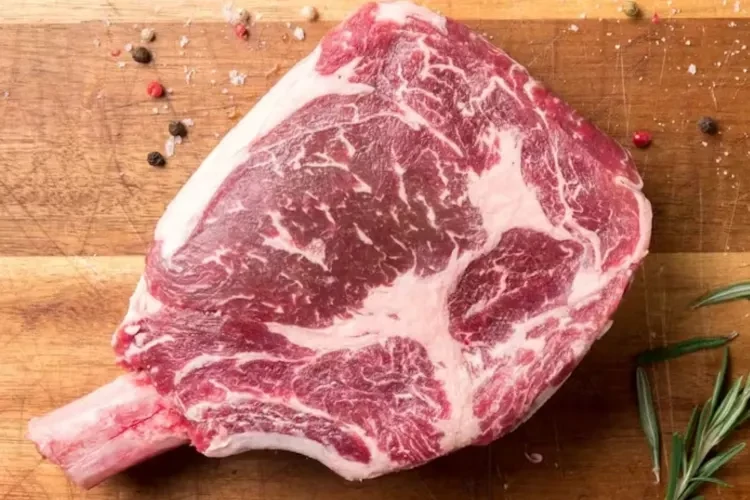
Bone spacing varies by species and by cut. Once you understand the spacing, the limitation makes perfect sense.
- Beef ribeye (bone-in): listed on the website at 1.25 kg per bone, though actual weight varies slightly since every piece is hand-cut. You either get one bone, or a larger multi-bone section. WhatsApp customers are charged by actual weight; website orders are charged the listed price regardless of small variation, which is stated on the product page.
- Beef short rib (English cut): each bone is fixed. You can trim fat and adjust length, but you can't change the weight of the bone itself.
- Lamb racks: lamb rib bones are evenly spaced, but each chop is still defined by the bone. You can request a number of chops, not a specific gram weight, though frenching can trim some weight from each chop for presentation.
- Pork chops: same logic. The bone sets the width of each chop. You can trim the fat cap, but you can't make a chop lighter or heavier without removing the bone entirely.
This is why bone-in cuts are sold by the number of bones or chops, not by exact weight.
Worked examples from our range
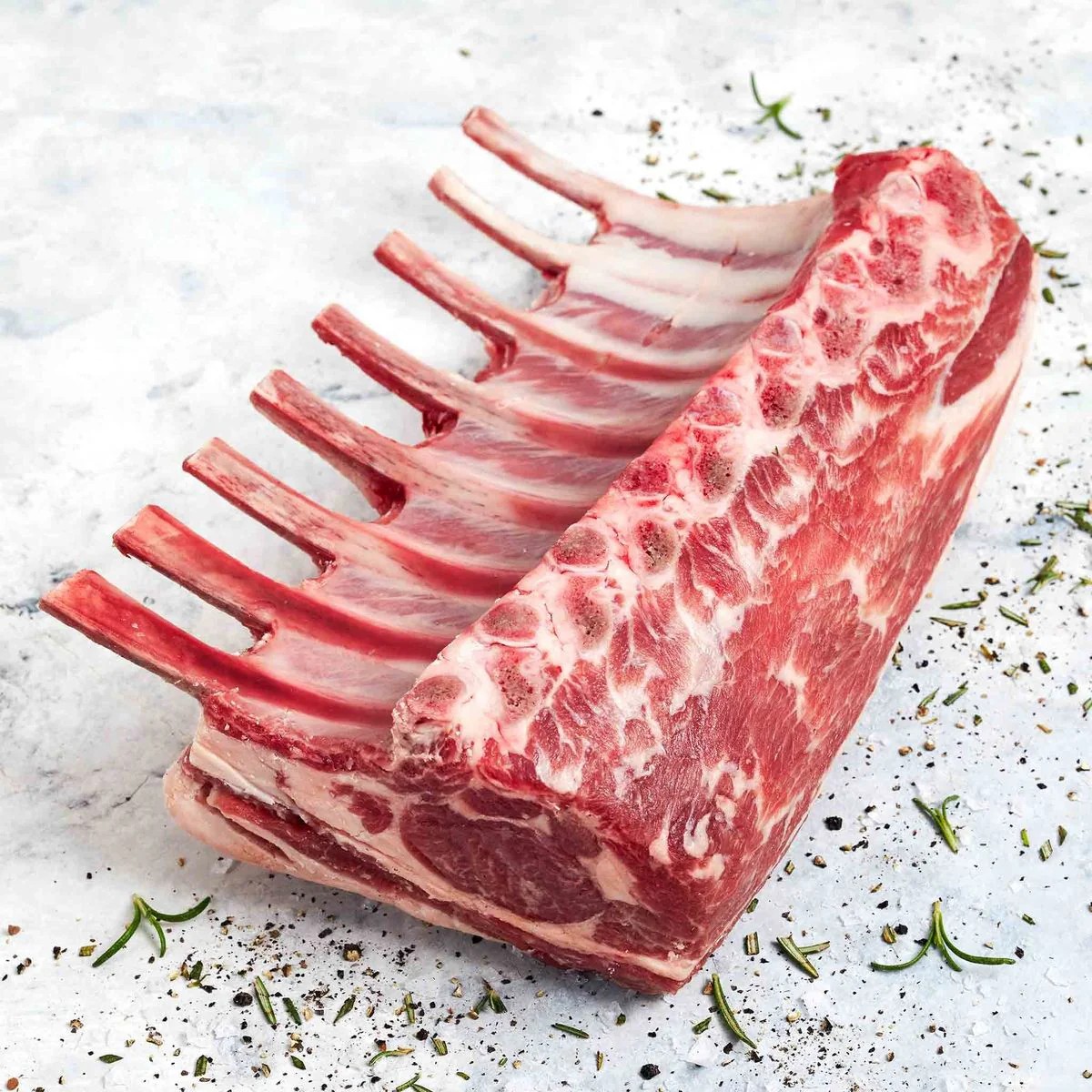
- Bone-in ribeye: sold as "one bone" or a multi-bone section, weight set by rib spacing rather than a target.
- Lamb racks: each rack has eight bones. You can request a number of chops, not a gram weight.
- Pork chops: each chop is one bone wide. You can request a number of chops, not an exact weight per chop.
- Boneless ribeye: you can request 300 g, 500 g or 1 kg, but the final piece will always land slightly above or below target since it's hand-cut.
These examples show the limitation isn't a policy choice. It's simply how the animal is built.
Why this matters for cooking
The weight of a bone-in cut isn't just a number. It affects how the cut cooks. A bone-in ribeye cooks more slowly since the bone retains heat. A lamb chop cooks faster since it's smaller and thinner. A boneless ribeye gives you more control over thickness and doneness. It's also worth knowing that cooking shrinkage reduces weight further on top of any bone loss, so the raw weight you start with is never quite what ends up on the plate. Bone-in cuts aren't inflexible, they're just a different tool for a different cooking method.
What about price?
Bone-in and boneless pricing differ for the same reason: usable yield. Once a bone is removed, the price per kilogram increases to reflect that the whole cut is now edible meat rather than partly bone. For a full breakdown of yield and how to compare bone-in versus boneless value, see our bone-in vs boneless guide.
The takeaway
Some cuts can be portioned close to your requested weight. Others can't be portioned by weight at all because the bone defines the size. All of our products are hand-cut, so even boneless portions will vary slightly. That variation is part of the craft and part of what makes each piece unique.
If you're ever unsure whether a cut can be portioned to a specific weight, just ask. We can tell you whether the cut is bone-in or boneless, how it's structured, and the most practical way to order it.
We're not here to sell you meat. We're here to make you better at buying it.
— The Meat Guy Hong Kong