
Pan‑Seared Sirloin — Works for Both Australian & US Beef
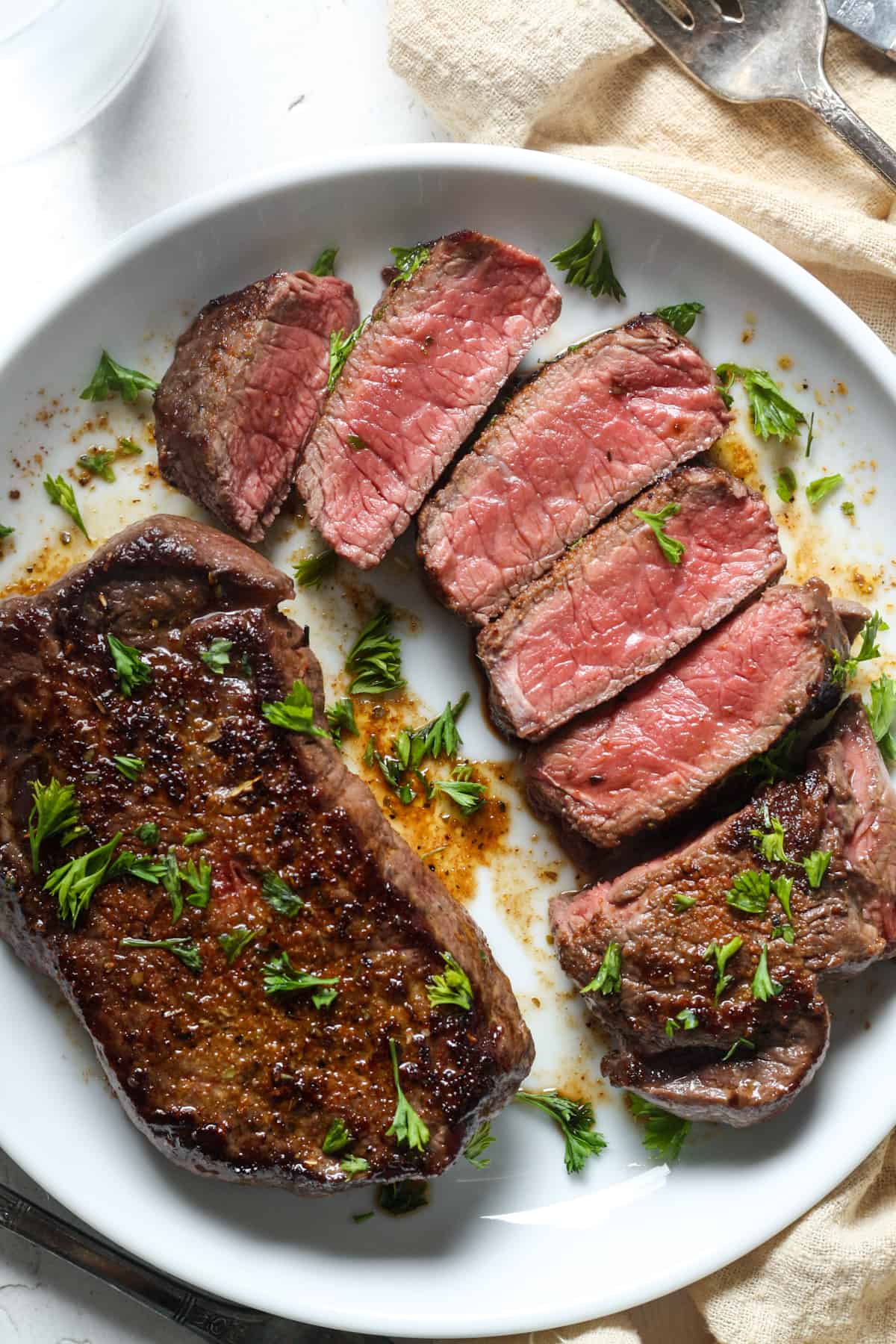
A simple, honest sirloin recipe designed to highlight the natural flavour differences between Australian (grass‑fed) and US (grain‑fed) beef. Same method, different starting point — cook whichever you chose and taste the difference.

5 Mins. 8-10 Mins. 1-2
🛒 Ingredients:
Steak
- 1 sirloin steak (230g / 8oz), Australian or US
- Salt & pepper
- 1 tbsp neutral oil (canola, rice bran)
Finishing
- 1 tbsp butter
- 1 clove garlic, smashed
- 1 sprig thyme or rosemary (optional)
👨🍳 Instructions:
- Pat steak dry and season generously with salt and pepper.
- Heat oil in a heavy pan over high heat until shimmering. Good heat management matters more than any specific ingredient — we go into this in more depth in great cooking isn't about recipes, it's about heat.
- Place steak in the pan and sear 2–3 minutes until a deep golden crust forms. That crust is about flavour and texture, not about sealing in juices — a common myth we've addressed here.
- Flip and sear another 2–3 minutes for medium-rare — about 54–57°C internal, or firm but with give when pressed. Grass-fed sirloin tends to reach this point slightly faster than grain-fed, so start checking a minute or so earlier if you're using Australian beef. If you're working without a thermometer, our guide on how to know if meat is cooked covers the visual and touch cues.
- Add butter, garlic, and herbs; baste for 30–45 seconds.
- Rest for 5 minutes before slicing — this step matters as much as the sear itself, and we explain why in resting meat after cooking.
If using Australian (grass‑fed) sirloin:
- Leaner, cooks slightly faster
- Benefits from a touch more oil or butter in the pan
- Flavour is cleaner, more mineral, more "beef‑forward"
- Texture is firmer — avoid overcooking
If using US (grain‑fed) sirloin:
- More marbling, cooks slightly slower
- Renders its own fat — can handle higher heat
- Flavour is richer, rounder, slightly buttery
- Texture is softer — more forgiving if slightly overcooked
These notes turn the recipe itself into a practical extension of this week's blog — same method, different starting point. Notice the difference.
🍽️ Serving Suggestions:
A few simple sides that won't compete with the steak:
- Steamed or roasted seasonal greens
- A simple side salad
- Crusty bread to mop up the pan juices
Not sure how much to order for your table? Our Meat Planner can help you work it out — for either style.
✨ Pro Tip:
Slice sirloin across the grain and serve with pan juices spooned over the top — cutting against the grain makes a real difference to tenderness, especially on a firmer cut like sirloin. A squeeze of lemon brightens both styles — grass‑fed and grain‑fed — without masking the flavour you're trying to taste.
Educational Notes
- Australian sirloin is typically grass‑fed, producing a cleaner, leaner flavour.
- US sirloin is typically grain‑fed, producing richer marbling and a buttery finish — the reasoning behind this is covered in more detail in this week's blog, linked above.
- Neither is "better" — they're simply different starting points. For more on how fat type (not just quantity) affects flavour and texture, see why all fat isn't the same.
- This recipe is intentionally minimal so you can taste the difference directly.
This recipe uses:


