
How Do You Know If Seafood Is Fresh When You Buy It?
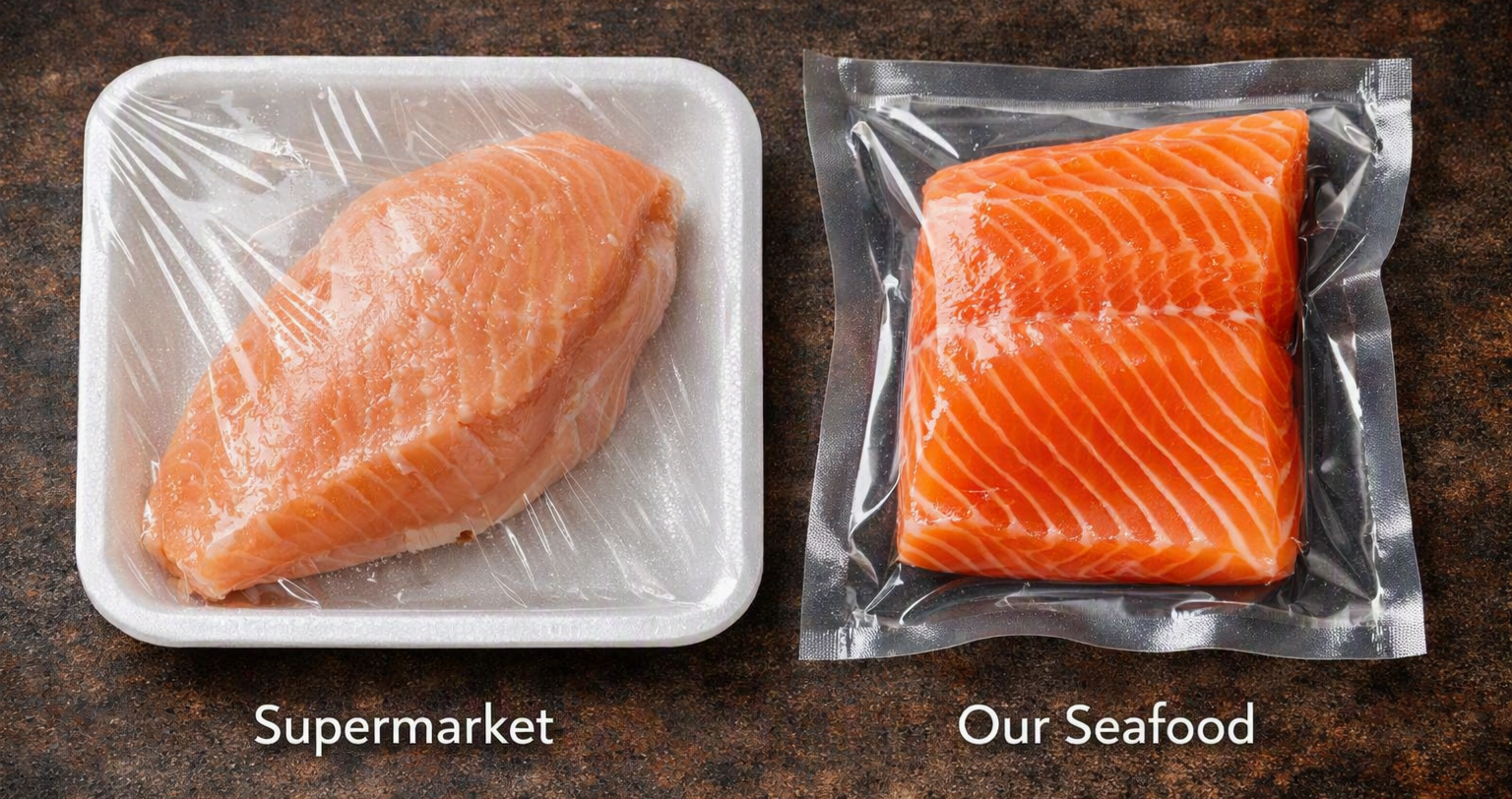
Illustration only — but the difference in handling and packaging is real.
Fresh seafood gives itself away in seconds — through smell, colour, texture, and packaging. Once you know what to look for, you'll never be uncertain again.
1. The Smell Test
The fastest and most reliable indicator.
Fresh seafood smells clean and oceanic — not "fishy." A strong fish smell is a sign of protein breakdown, not freshness. This surprises most people, but it's the single most important thing to understand about seafood quality.
| Product | What You Should Smell | What to Avoid |
|---|---|---|
| Prawns | Clean, slightly briny | Ammonia or sour odour |
| Scallops | Mild, almost sweet | Any strong smell — means it's been sitting too long |
| Salmon | Clean, mild ocean scent | Strong "fishy" smell — means the fat is oxidising |
| White fish (snapper, sole) | Virtually no smell at all | Any strong odour is a red flag |
A note on vacuum packed seafood:
A sealed pack may release a slightly stronger smell when first opened — this is normal and dissipates within a minute or two. It's the result of the sealed environment, not a sign of poor quality. Why vacuum packed meat sometimes smells when you first open it.
2. The Visual Check
Freshness shows clearly in colour and surface texture.
Colour should be vibrant and consistent:
- Prawns → grey and translucent when raw, not yellowed at the edges
- Salmon → deep orange-pink, not pale or grey
- Scallops → cream to pale pink, not yellowing
Surface should look moist but never slimy. A slightly dry surface on a fillet is fine. Sliminess is not.
Flesh should be firm and springy when pressed gently — no indentation left behind.
Eyes on whole fish — clear and bright, not cloudy or sunken. Less relevant for fillets but worth knowing.
3. The Texture Check
Press gently with a fingertip.
Fresh seafood springs back immediately. Seafood that's past its best feels mushy or leaves a visible indentation. This applies equally to fillets, scallops, and prawns — the principle is the same across all three.
4. The Packaging Check
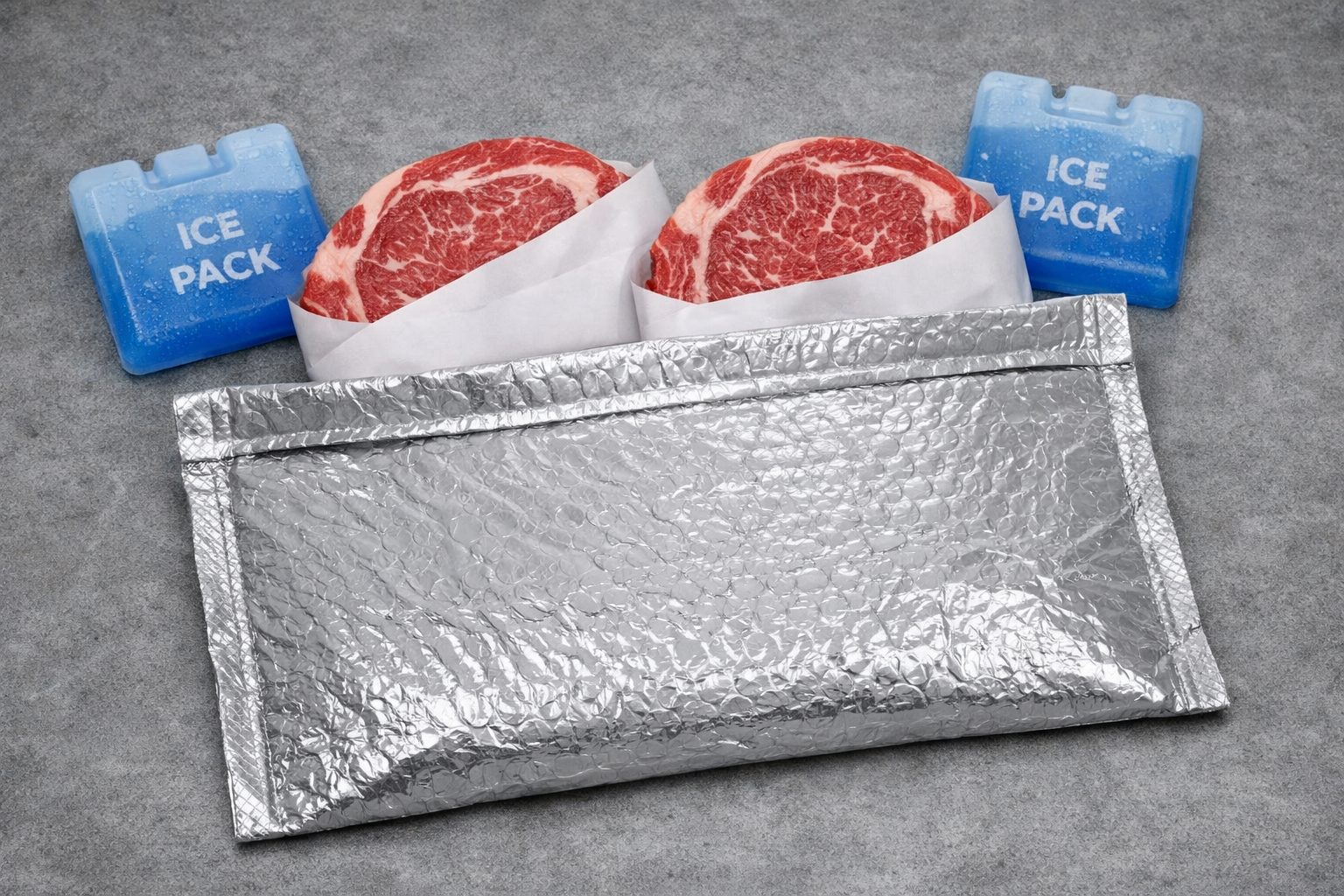
For customers receiving Thursday deliveries — freshness assessment happens when you open the bag, not in a shop. Here's what to check:
Vacuum seal — must be intact. Any breach means the product has been exposed to air and shelf life is reduced. If the seal is broken on arrival, contact us immediately.
Ice packs — should still be cold or partially frozen on arrival. If everything has fully defrosted something went wrong in transit.
Liquid pooling inside the pack — a small amount is completely normal. Excessive liquid suggests the product may have been previously thawed, which affects both texture and shelf life.
5. When It's IQF
Our prawns and scallops arrive IQF — individually quick frozen at source, which locks in freshness at its peak.
When thawed, they should look and smell exactly as described above. If they don't, something went wrong after freezing — not during it.
Good IQF seafood, properly stored and quickly turned over, should be indistinguishable from fresh once thawed. That's the standard we hold ourselves to.
Does where you buy your meat affect how you should prepare it?
Final Thought
Assessing seafood freshness takes about 30 seconds once you know the cues. Smell, colour, texture, and packaging tell the whole story — no specialist knowledge required.
Trust your senses. They're usually right.
How to tell when seafood is cooked — without cutting into it.
Why the seafood you buy affects how it cooks — and what to look for.