
Does an Expensive Cut Always Mean Better Flavour?
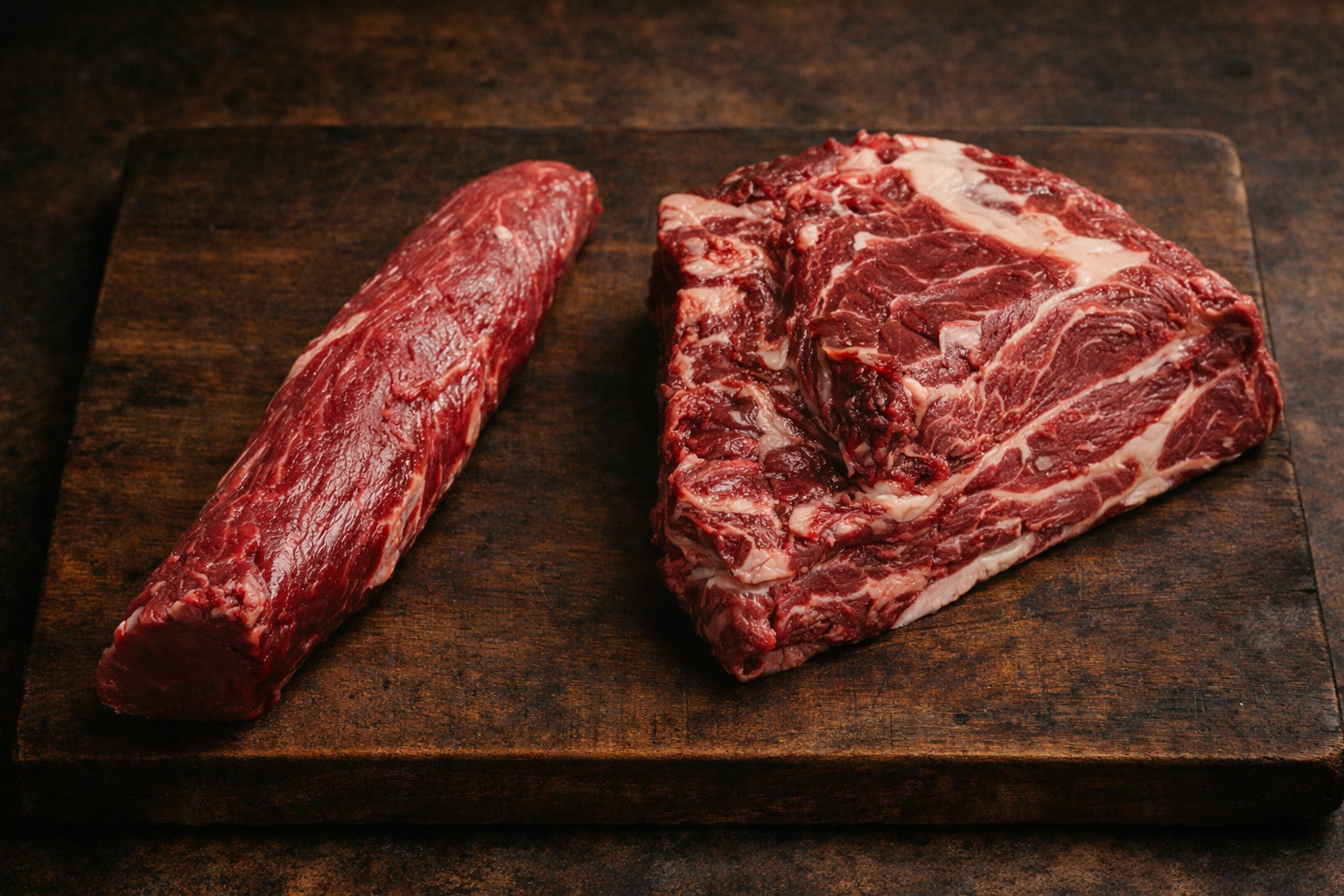
Not always. Price usually reflects how consistent and forgiving a cut is — not how flavourful it tastes. Some of the most flavourful meat you'll ever eat comes from cuts that used to be thrown away.
What Price Actually Reflects
When a cut is expensive, it's usually because:
- It's tender without much effort
- It comes from a part of the animal that does little work
- It's consistent and forgiving — hard to overcook badly
- There's less of it per animal
Tenderloin is the classic example. It's the least worked muscle on the animal, which makes it extraordinarily tender — but tenderness and flavour are not the same thing. A tenderloin cooked perfectly is mild and buttery. A hanger steak cooked perfectly is bold, minerally, and deeply savoury.
Fat, Collagen, and Where Flavour Actually Comes From
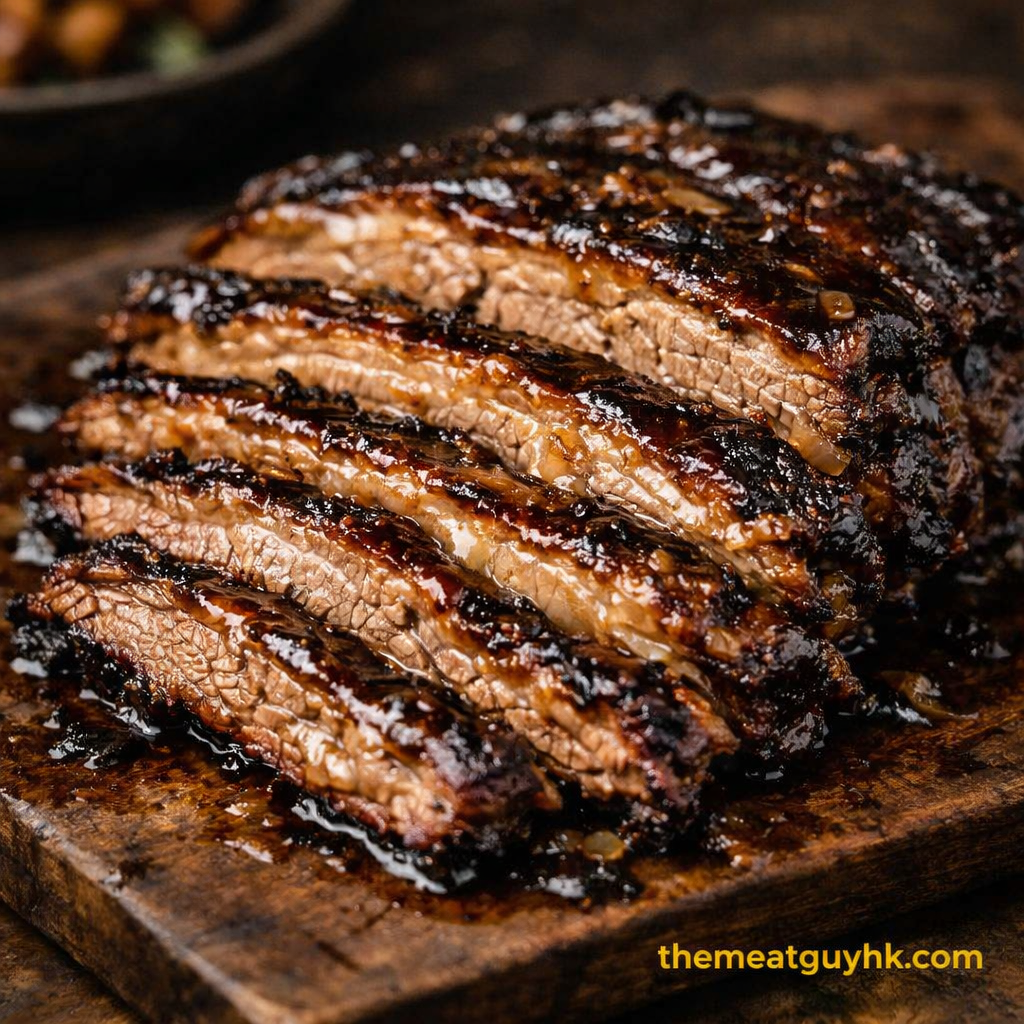
Flavour in meat comes from two main sources: fat and collagen. Cheaper cuts tend to have more of both.
Fat carries flavour compounds developed during the animal's life — grass-fed fat tastes different from grain-fed fat because the animal's diet is literally stored in it. Collagen, found in connective tissue, breaks down into gelatin during slow cooking — giving braised dishes that rich, sticky, coating mouthfeel that no amount of butter can replicate.
This is why brisket, short rib, chuck, and beef cheek are so deeply satisfying when cooked properly. Understanding how heat works during cooking explains exactly why slow and low heat transforms these cuts in a way that fast cooking never could — and why slow cooking still matters even in fast-paced cities like Hong Kong.
Ease vs. Skill
Expensive cuts are prized because they're forgiving — tender even with quick, high heat and minimal technique. Ribeye, striploin, and tenderloin will produce a decent result even if you make a few mistakes.
Cheaper cuts demand more from the cook. Get the method wrong and a brisket is dry and tough. Get it right and it's one of the best things you'll ever eat. Buying a secondary cut isn't a compromise — it's a sign of cooking confidence.
Why Restaurant Menus Changed
A generation ago, hanger steak was offcuts. Beef cheek was peasant food. chuck was sold for stewing. Chefs started using these cuts not because they were cheap — though that helped — but because the flavour and texture were genuinely superior for certain dishes.
Once restaurants put them on menus and customers tasted them, demand increased. Prices followed. The cuts didn't change — the recognition did. Hanger steak is a perfect example of this shift — once the butcher's secret, now a fixture on bistro menus across Hong Kong and beyond.
In Hong Kong this shift happened later than in Europe or the US, which means some of these cuts are still available at reasonable prices if you know where to look and who to ask.
Cooking Method Is Everything
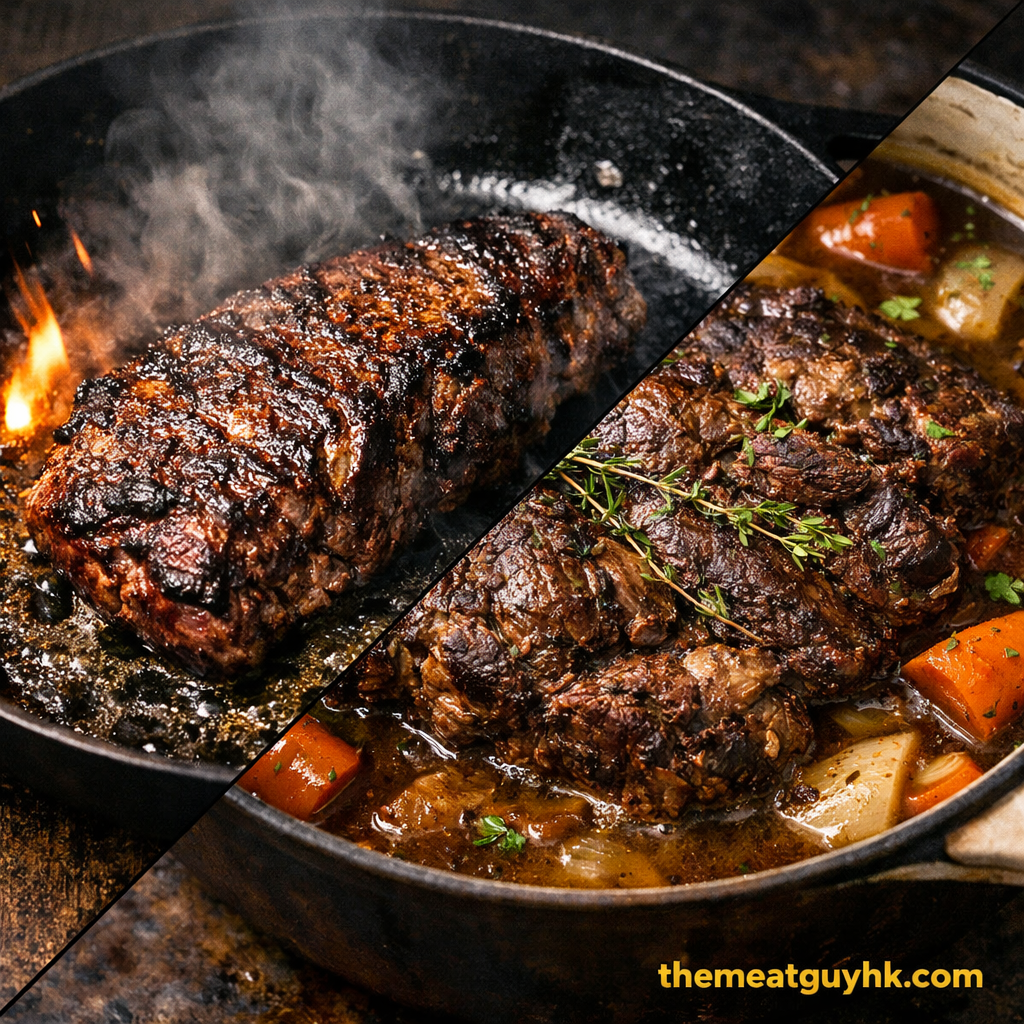
A cheap cut cooked correctly will beat an expensive cut cooked poorly every time. The method has to match the cut:
- Slow and low — brisket, chuck, short rib, beef cheek, lamb shoulder. Time breaks down collagen into gelatin and fat renders into the meat
- Fast and hot — hanger, flank, skirt. These are lean and muscular — overcook them and they tighten up fast. Why lean cuts go wrong and how to cook them properly covers exactly what happens when the wrong method meets the wrong cut
If you're unsure whether a cut is done, how to know if meat is cooked without cutting into it gives reliable indicators for both slow-cooked and fast-cooked cuts.
The Cuts Worth Knowing
| Cut | Why It Was Cheap | Why It's Worth It |
|---|---|---|
| Hanger steak | Only one per animal, needs trimming | Bold, minerally flavour — the butcher's secret |
| Flank | Lean and muscular, needs technique | Intense beef flavour, great with marinades — see how marinades work on these cuts |
| Beef cheek | Long cook required | Extraordinarily rich and gelatinous when braised |
| Chuck | Tough if cooked fast | Best slow-braised beef you'll make at home |
| Short rib | Fat and connective tissue | Deep flavour, falls off the bone |
| Brisket | Requires time and patience | The definitive slow-cook cut |
The Practical Takeaway
Next time you're choosing a cut, ask two questions rather than one:
- What's my cooking method?
- What flavour profile am I after?
If you have time and patience, a cheaper cut will often give you a more interesting result than a premium one. If you need something fast and reliable, pay for the consistency that an expensive cut provides. Both are valid — the mistake is assuming price equals flavour.
Final Thought
Price reflects ease and consistency. Flavour reflects fat, collagen, and cooking method. Understanding that distinction makes you a better shopper and a better cook — and it opens up a whole range of cuts that most people walk straight past.