
Cooking Salmon
Does the shape of a salmon portion affect how it cooks?
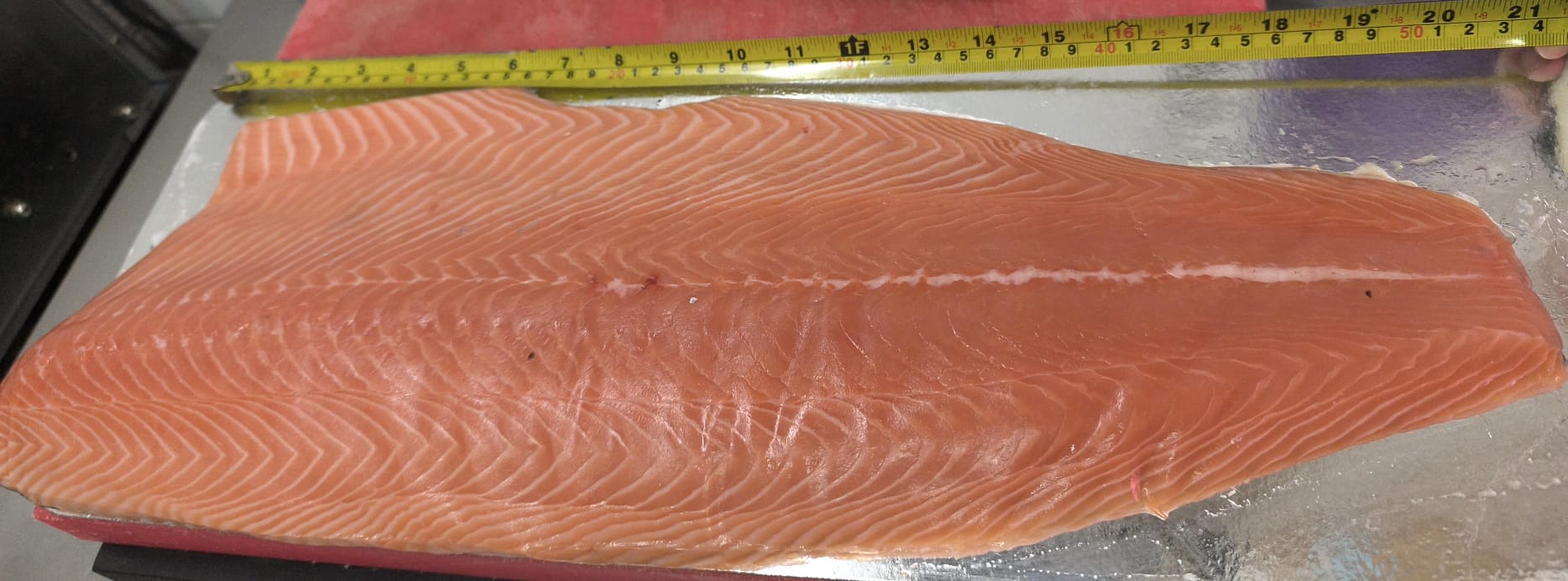
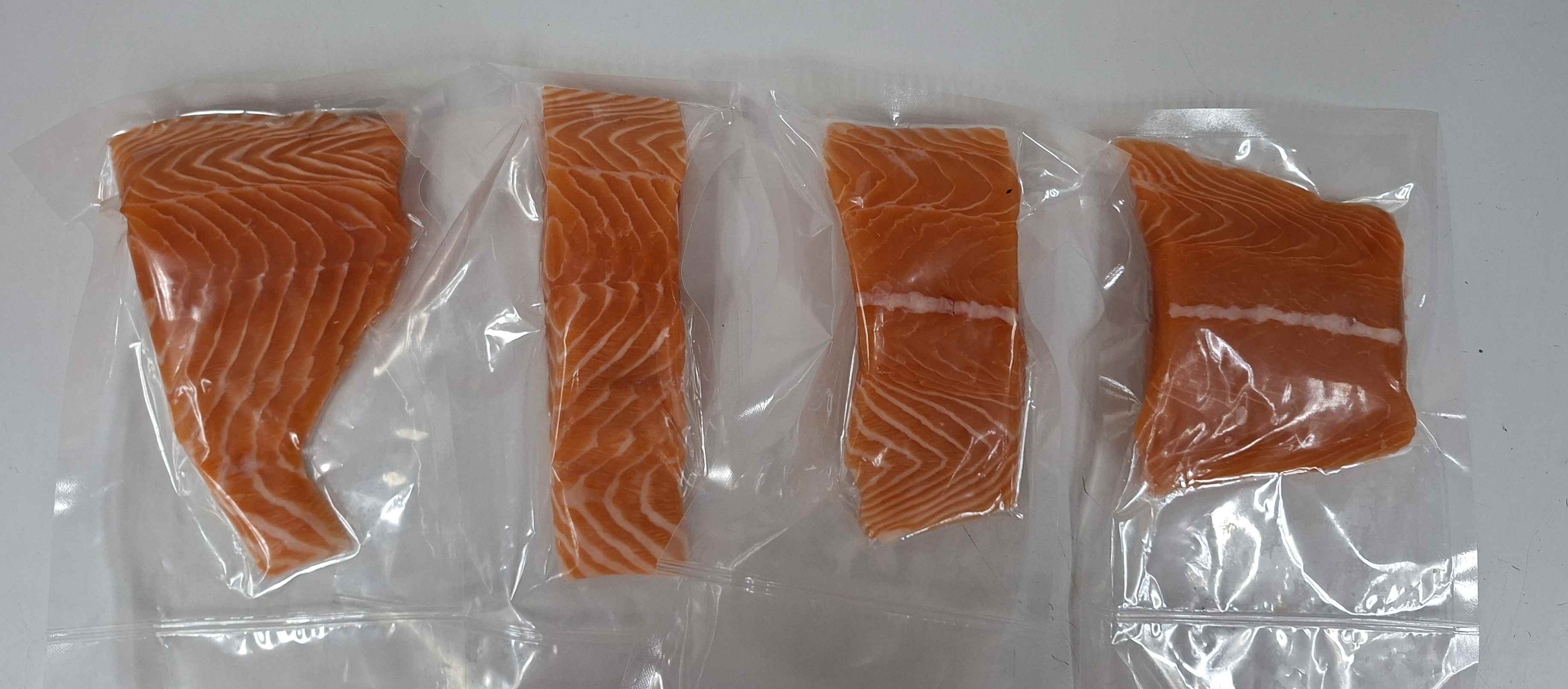
Customers often notice that salmon portions don't always look the same from week to week. Some pieces are long and narrow, others are shorter and thicker, and occasionally you'll get a portion that looks almost square. The weight is consistent, but the shape isn't. That variation is normal, and it comes directly from how a whole salmon fillet is built.
Different parts of the fillet behave differently in the pan
A salmon fillet isn't uniform from end to end. The head end is thicker and more solid, the mid-section is even and tidy, and the tail end tapers off. When you portion a fillet into equal weights, each piece inherits the natural geometry of the section it came from. That's why two 200g portions can look completely different.
Those differences matter when you're cooking with direct heat. A thicker piece takes longer to cook through. A thinner piece cooks faster and can overcook if you treat it the same way as a centre-cut portion. Shape affects heat flow, and heat flow affects texture.
How shape changes cooking time
Here's what customers often don't realise:
- A thick head-end portion needs a gentler approach or slightly longer time.
- A mid-section portion is the most predictable because it's even from edge to edge.
- A tail-end portion cooks quickly and benefits from high heat and short contact.
If you pan-sear, grill, or air-fry salmon, shape plays a role in how evenly the heat moves through the piece. This is why two portions of the same weight can finish at different times. If you're cooking with the skin on, it's also worth knowing why the skin can curl up in the pan and how to stop it, since that affects contact and evenness too.
When shape doesn't matter at all
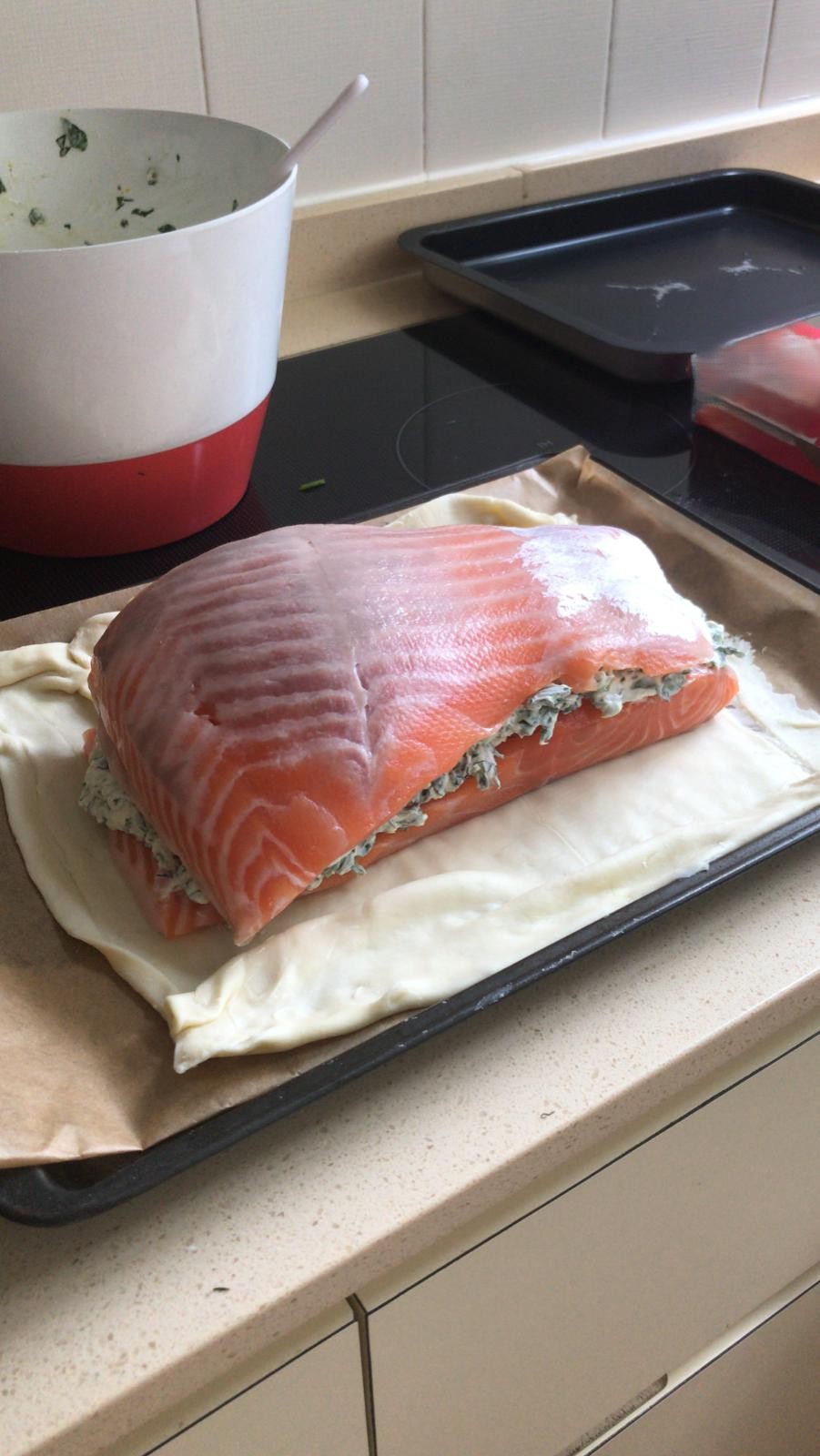
Some cooking methods eliminate the issue entirely. This week's salmon en croûte recipe is a perfect example. Once the salmon is wrapped, sealed, and baked inside pastry, the shape of the portion becomes irrelevant. The pastry creates an even cooking environment, so the heat reaches the fish gently and consistently. Whether your portion is long, short, thick, or tapered, it cooks the same way.
The same applies to dishes like poke bowls, curries, stews, or anything where the salmon is cubed. Once it's cut into smaller pieces, the original shape doesn't matter.
Why the variation exists in the first place
Every salmon portion we sell is hand-cut. We portion by weight, not by shape, because shape is determined by the natural structure of the fillet. We've gone into this in more detail elsewhere, but the short version is: if we only sold the neat centre-cut pieces, half the fish would be unsellable. Instead, we mix portions fairly across customers so everyone receives a balance of head, mid, and tail cuts over time.
The takeaway
Shape affects cooking only when you're using direct heat. If your portion is thicker or thinner than usual, adjust your cook time slightly and you'll get the same result. For wrapped, baked, or cubed preparations, shape doesn't matter at all.
If you ever want advice on how to cook the specific portion you received, just ask. We're always happy to guide you based on the cut you have in front of you.
We're not here to sell you meat. We're here to make you better at buying it.
— The Meat Guy Hong Kong