
Is Pink Chicken Near thr Bone Undercooked?
Properly cooked chicken should be opaque, firm, and release clear juices.
Short Answer
Not always.
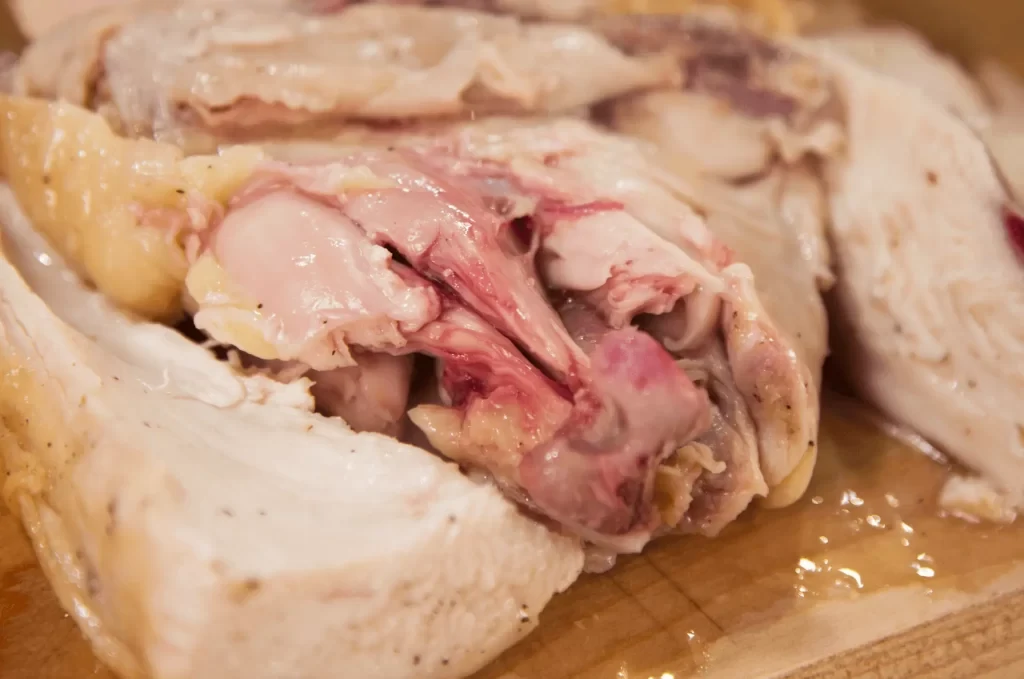
Chicken can be fully cooked and still show pink near the bone — especially in bone-in cuts.
Colour alone isn’t a reliable indicator of doneness. Temperature is.
The Myth About Pink Chicken
Many people assume:
👉 Pink = raw
But that’s not always true.
With bone-in chicken, it’s common to see a pink tint near the bone even when the meat is fully cooked.
Why Chicken Can Look Pink When It’s Cooked
The pink colour usually comes from myoglobin — a natural protein found in muscle and bone marrow.
During cooking:
- Heat causes pigments near the bone to react
- These pigments can spread into surrounding meat
- This creates a pink or reddish tint, even when fully cooked
This is more noticeable in:
- bone-in chicken
- younger birds
- previously frozen chicken
This is why colour alone isn’t used in food safety guidelines.
How to Tell If Chicken Is Actually Cooked
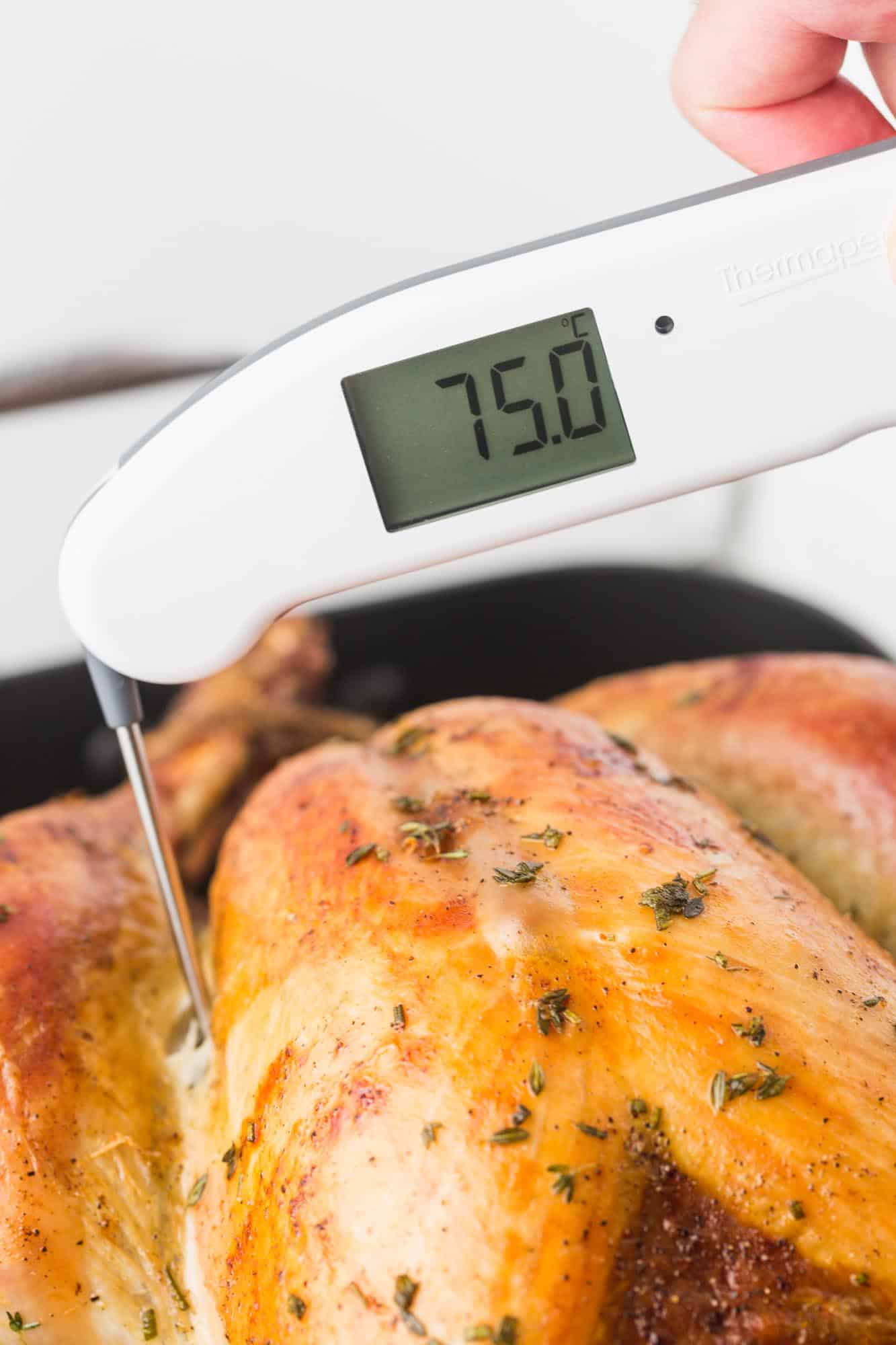
Instead of relying on colour, check:
- Internal temperature: 75°C (165°F) (a meat thermometer is the most reliable way to check)
- Texture: firm, not soft or rubbery
- Juices: run clear
If you want a fuller breakdown of how to check doneness across different cuts, 'How to know if meat is cooked without cutting into it", covers the full picture
If these are right, the chicken is safe to eat — even if there’s some pink near the bone.
If you want to make this even easier and more consistent, here are some simple tools and techniques that help:
👉 7 Tools & Techniques That Make Meat Cooking Easier (and Better
If you want a fuller breakdown of
When Pink Is a Problem
Be cautious if:
- The meat is pink throughout (not just near the bone)
- The texture is soft or underdone
- Juices are visibly bloody
- Internal temperature hasn’t reached 75°C
In these cases, it likely needs more cooking.
Final Thought
Pink near the bone doesn’t automatically mean undercooked chicken.
Don’t rely on colour alone — use temperature and texture as your guide.
That’s the difference between guessing and knowing.