
Why Some Meat Is Better Cooked Fast — And Some Isn’t
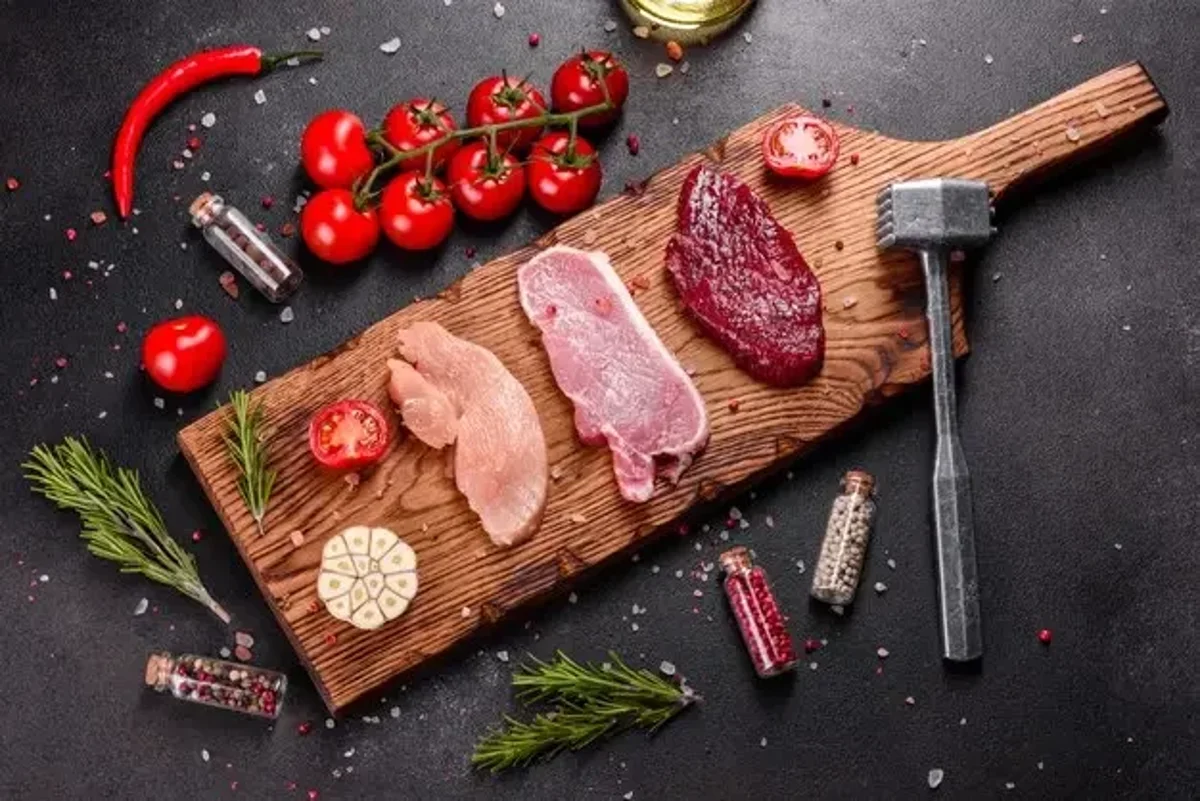
Why Some Meat Is Better Cooked Fast — And Some Isn’t
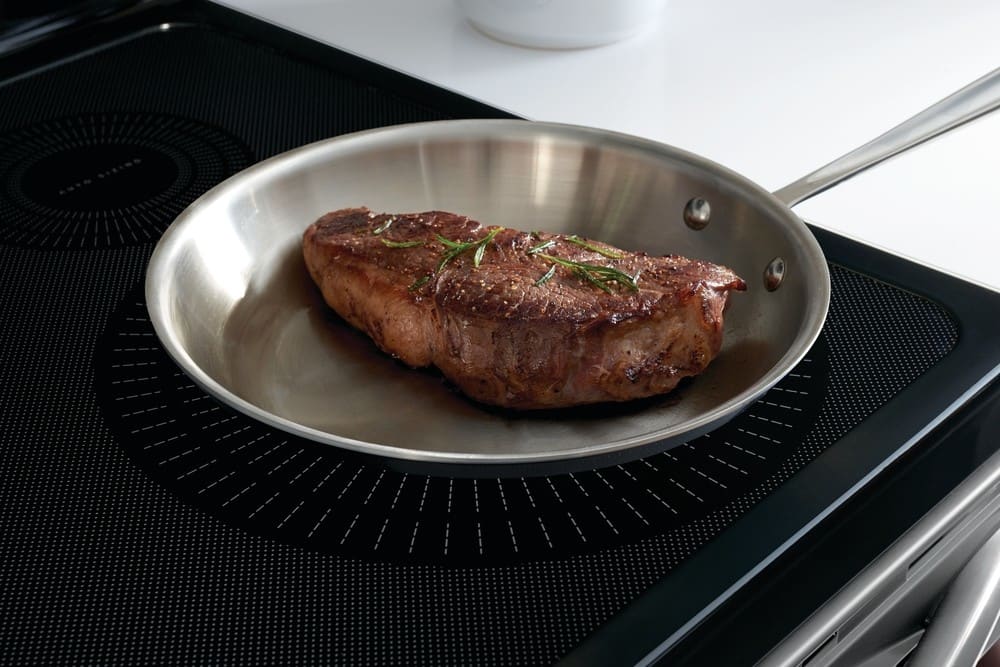
Most home cooks have been told how to cook meat — sear this, roast that, grill the other.
But the real key to great results isn’t the recipe.
It’s understanding why different meats respond differently to heat.
Once you understand that, everything becomes easier — regardless of your kitchen size, your equipment, or how busy your week looks.
This principle applies to beef, chicken, lamb, pork, and fish.
And it sets the stage perfectly for this week’s focus on tuna — even though the lesson itself goes far beyond tuna alone.
1. The Real Reason Meats Cook Differently
Muscle Density & Moisture
Every cut of meat is built differently. Two factors matter more than anything else:
Muscle Density
Dense muscles — like tuna, beef steaks, and pork tenderloin — conduct heat quickly. That means:
-
They cook fast
-
They dry out fast
-
They reward precision, not time
Looser, fattier muscles — like chicken thighs, lamb shoulder, or pork belly — behave very differently:
-
Heat moves more slowly
-
Fat melts gradually
-
Tenderness comes from time, not speed
Moisture & Fat Content
Lean meats lose moisture quickly.
Fatty meats stay juicy even when cooked longer.
This is why tuna, ribeye, and chicken thighs all behave so differently — even though each one can be “easy” when treated correctly.
2. Why Tuna, Ribeye, and Chicken Thighs Feel So Different
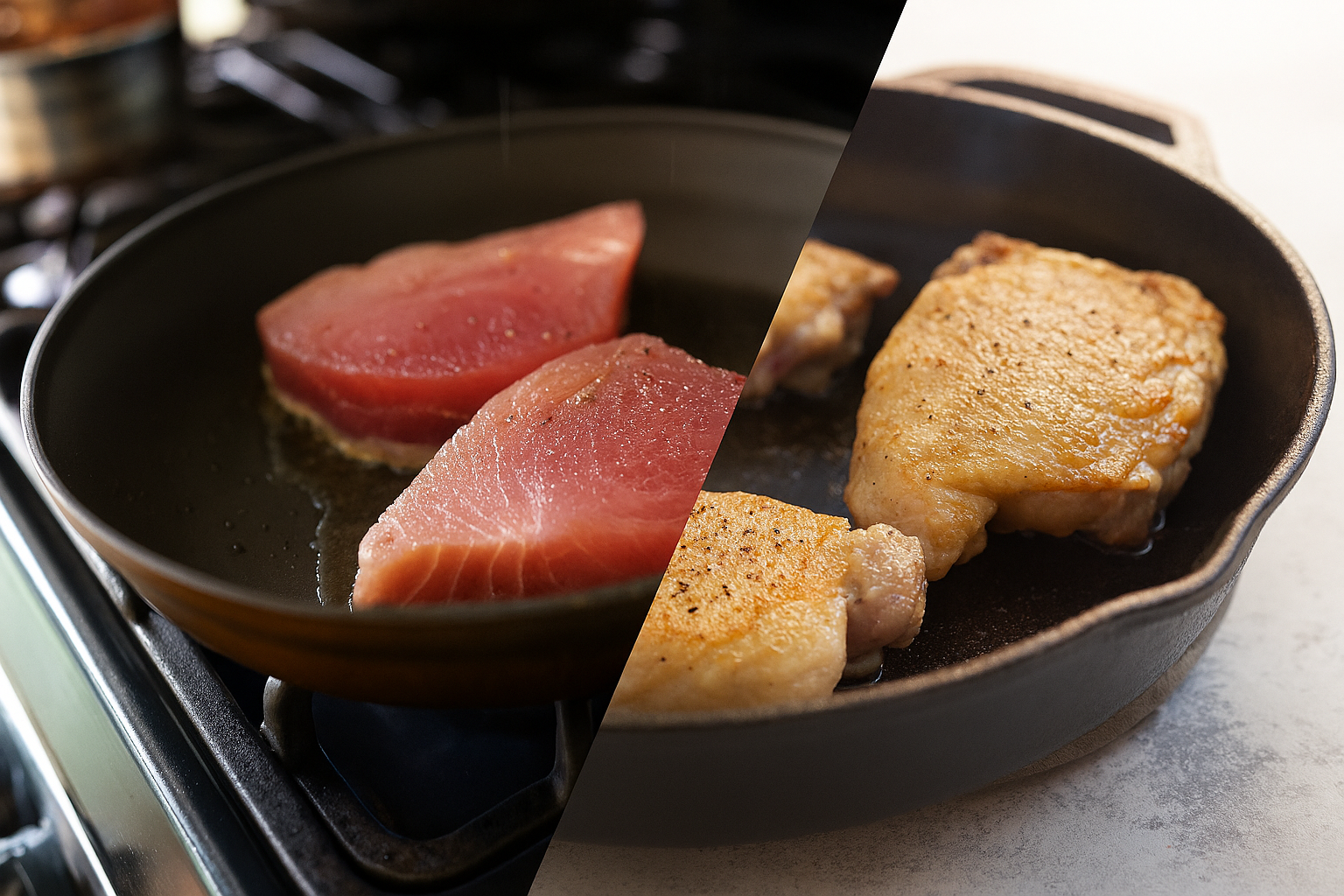
Tuna — Fast Structure, Delicate Margin
Tuna is dense and lean.
It firms up quickly and dries out just as fast if pushed too far.
But that same structure makes it ideal for:
-
very fast searing
-
gentle poaching
-
minimal-heat preparations
It reacts instantly to heat — which is why respect matters more than aggression.
This is exactly why this week’s recipe, Easy Poached Tuna Ceviche, works so well.
It uses gentle heat and timing, not force.
Ribeye — Fast, but Protected
Ribeye behaves differently because of one thing: fat.
Marbling protects the meat, allowing it to handle:
-
high heat
-
medium heat
-
slicing into strips or cubes
-
quick or slightly slower cooking
Ribeye cooks quickly, but it forgives mistakes — which is why it’s so versatile.
Chicken Thighs — Slower and Flexible
Chicken thighs contain:
-
more fat
-
more connective tissue
-
more built-in moisture
They stay juicy even if the heat isn’t perfect or the timing slips.
That’s why thighs feel “easy” — they absorb variation instead of punishing it.
3. The Real Fear in Home Kitchens
Most home cooks aren’t struggling with technique.
They’re struggling with confidence.
-
Lean meats get overcooked because people fear undercooking
-
Fatty meats get undercooked because people assume they’re “easy”
-
High-heat stovetops (common in Hong Kong and many urban kitchens) make timing feel stressful
The truth is simple:
Heat control matters more than recipes.
Once you understand what the cut needs, the fear disappears.
4. Why Heat Matters More Than Instructions
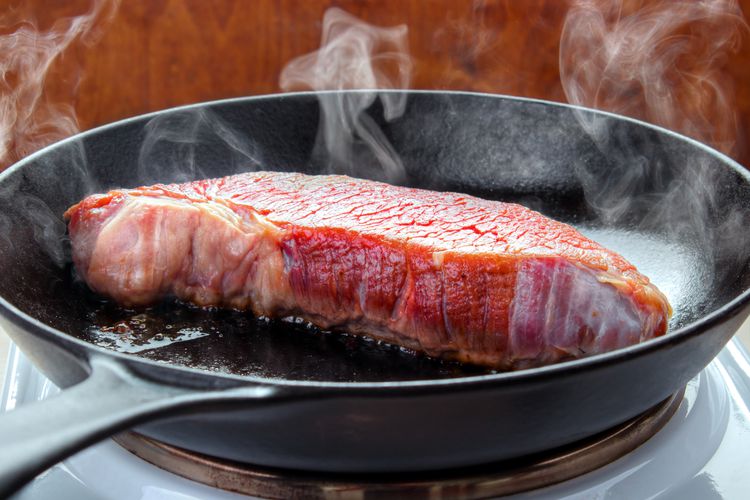
Different heat levels serve different cuts:
High Heat = Speed
Best for:
-
thin steaks
-
tuna (when searing)
-
pork tenderloin
-
quick-cook cuts
High heat gives flavour fast — but offers little margin for error.
Medium Heat = Control
Best for:
-
chicken thighs
-
pork chops
-
thicker steaks
-
most fish fillets
Medium heat offers balance and forgiveness.
Low Heat = Time
Best for:
-
lamb shoulder
-
brisket
-
pork belly
Low heat melts fat and connective tissue, turning “tough” cuts into something exceptional.
5. The Simplest Rule You’ll Ever Use
Cook fast when the cut is:
-
lean
-
dense
-
naturally tender
-
low in connective tissue
Examples: tuna steak, ribeye steak, pork tenderloin, chicken breast.
Cook slow when the cut is:
-
fatty
-
tough
-
rich in connective tissue
-
uneven in structure
Examples: chicken thighs, brisket, lamb shoulder, pork belly.
This rule works in any kitchen — from a compact Hong Kong flat to a full Western setup.
6. Why This Matters for Tuna Week
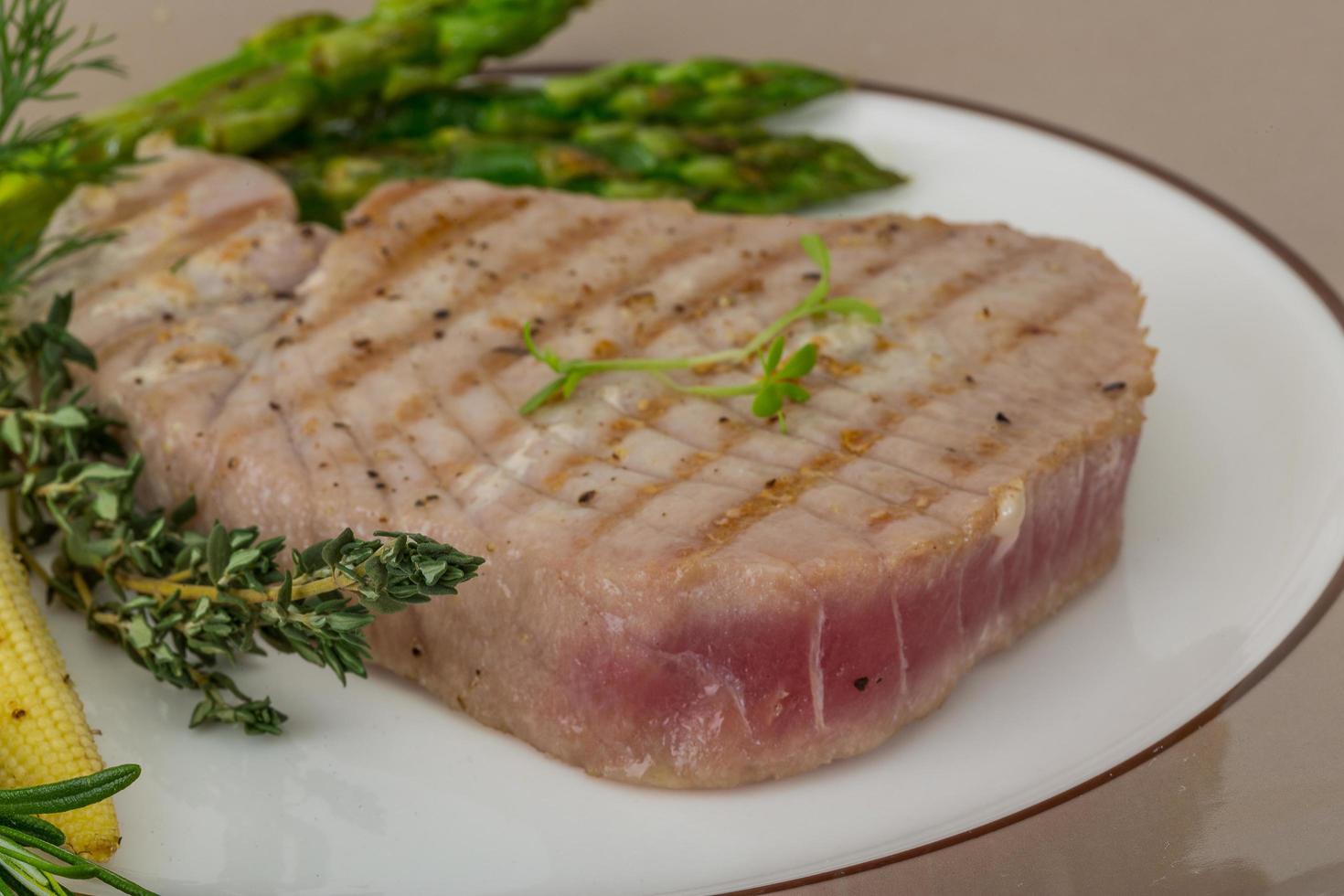
Tuna is one of the clearest examples of a cut that reacts instantly to heat.
That’s why it shines when cooked gently rather than aggressively.
This week’s Easy Poached Tuna Ceviche shows exactly that — minimal heat, clean flavour, no stress, no precision timing.
Understand the cut first.
Choose the method second.
Closing Thought
Good cooking isn’t about memorising techniques or chasing perfect recipes.
It’s about understanding what the cut needs — fast heat or slow time — and matching that to how you actually cook.
Know the cut.
Match the heat.
Everything gets easier.



Thank you for posting your blog comment. It will be reviewed and set live soon. If you provided your email then you will be notified of replies to this comment.